Bank & Credit Union Documents

Mobile Notary for Bank and Credit Union Documents in Las Vegas and Henderson

Lake Mead Mobile Notary provides mobile bank and credit union document notarization for customers, borrowers, co-signers, small businesses, and lenders working with branches and credit unions across the Las Vegas Valley.

Common appointments include signature card notarization, safe deposit box access and witnessing forms, loan document packages, financial affidavits, and compliance forms supplied by banks, credit unions, and lenders that require a notarial certificate before processing.

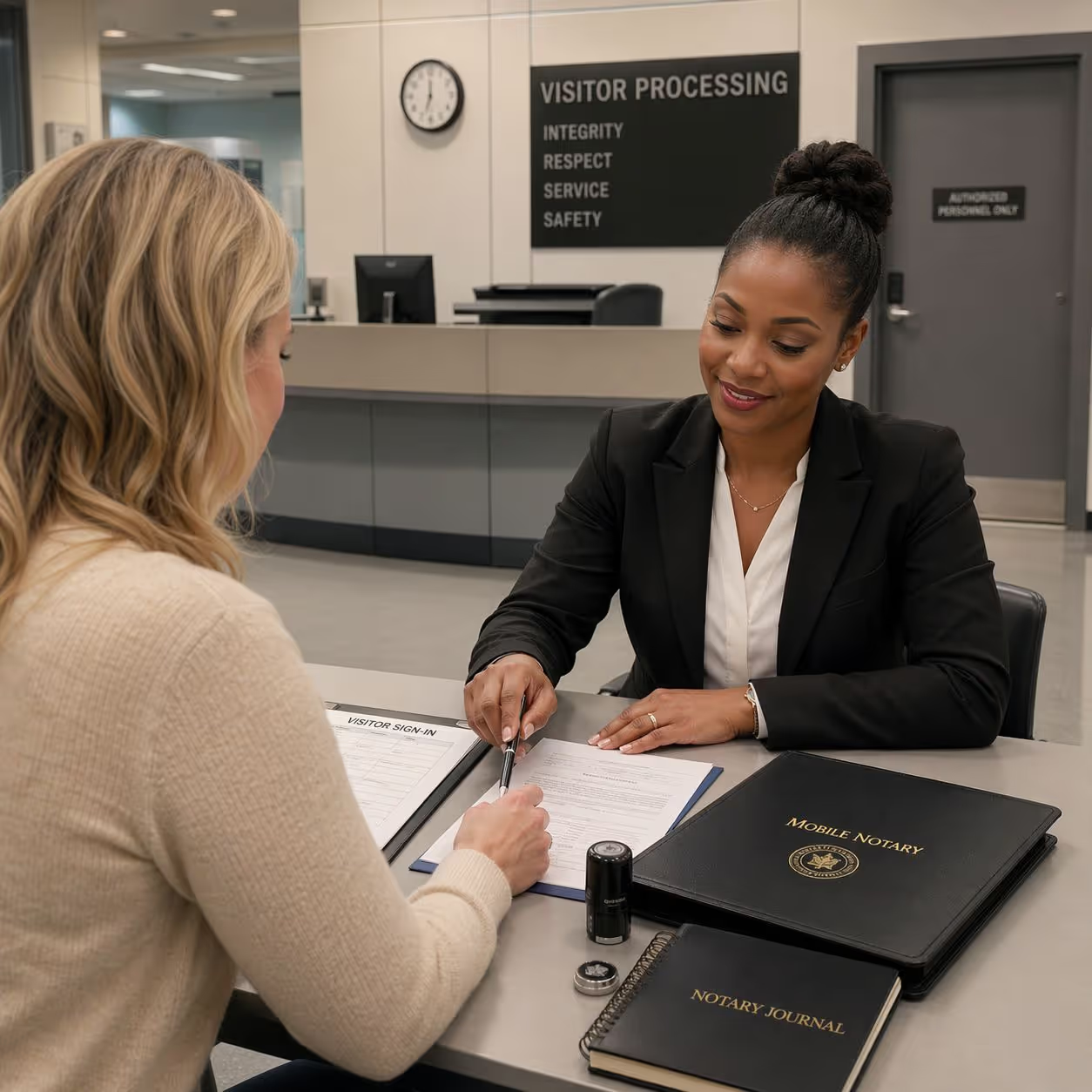
During each visit, the notary verifies the identity of every signer, completes the requested lawful Nevada notarial acts on designated bank or lender forms, and follows written instructions from branches or lenders regarding how documents should be executed and returned.

Before scheduling, customers and lender teams should confirm which forms require notarization, who must sign, what identification each signer will present, whether the branch has specific witness or access policies, and any appointment or access requirements for safe deposit boxes or after-hours visits.

Banking & Lending Context

Where Notarization Fits in Bank and Credit Union Operations

Notarization supports identity verification and sworn statements within banking and lending workflows; it does not replace branch policies, underwriting, or approval decisions.

Banks and credit unions use forms and documents to open accounts, update records, provide access to safe deposit boxes, close or modify loans, and document financial affidavits and compliance requirements. Some of those forms include a notarial certificate so a signer’s identity and signature or sworn statement can be formally verified.

Examples include signature cards for new or updated accounts, safe deposit box access and witnessing forms, loan document packages for certain consumer or secured loans, lender-requested affidavits, and other compliance forms that specify an acknowledgment or jurat.

When a notarial act is requested, the notary verifies each signer’s identity and completes the appropriate acknowledgment or jurat authorized by Nevada law on the designated document. The bank, credit union, lender, and their written policies remain responsible for deciding which forms require notarization, what terms and conditions apply, and how documents are processed, approved, or funded.

Document Types

Common Bank and Credit Union Documents Presented for Notarization

Each institution has its own forms and requirements, but several document categories frequently include notarial certificates.

  • Signature cards and account documents

    Forms used to establish or update account signers, often requiring identity verification and, in some cases, a notarial acknowledgment depending on institutional policies.

  • Safe deposit box access and witnessing forms

    Documents authorizing access to safe deposit boxes or recording box inventory and witnessing events when required by branch procedures.

  • Loan document packages

    Selected documents within consumer, personal, or secured loan packages that include a notarial certificate at the lender’s request, such as certain affidavits or acknowledgments.

  • Financial affidavits and compliance forms

    Sworn statements and compliance forms requested by banks, credit unions, or lenders, where a jurat or acknowledgment is specified by the institution.

  • Bank and lender-supplied affidavits or certifications

    Institution-specific affidavits, declarations, or certification forms that require notarization before branch, lender, or investor review.

  • Supporting forms for specialized services

    Documents that support specialized services, such as certain investment or account changes, which may require notarization along with other institutional approvals.

Signer Roles

Who Signs Bank and Credit Union Documents and Who Decides Requirements

Banking documents can involve individual customers, co-signers, business owners, and authorized representatives; institutions decide how each document must be executed.

  • Individual customers and borrowers

    Account holders, loan applicants, and borrowers may sign forms and affidavits in their personal capacity when required by banks or lenders.

  • Co-signers and joint account holders

    Co-borrowers and joint account holders may need to sign documents alongside the primary customer when specified by the institution.

  • Business owners and authorized representatives

    Owners and authorized signers for businesses may sign banking or lending documents in representative capacity when allowed under organizational documents and institutional policies.

  • Lender and branch instructions

    Bank and lender teams provide written instructions about which forms require notarization, who must sign, and where notarized documents should be delivered or presented.

  • Witnesses when permitted or required

    Some institutions may request impartial witnesses for certain transactions. Witness rules and policies are controlled by the institution; the notary can only provide witnesses when permitted and available.

  • Specialized signers under powers of attorney

    Authorized representatives may sign on behalf of another person or entity when a valid power of attorney or other authorization exists, subject to institutional acceptance.

Appointment Preparation

What to Prepare for a Bank or Credit Union Notary Visit

A few steps before the appointment help customers, businesses, and lenders complete notarization smoothly.

  • Branch or lender-provided forms

    Obtain the official forms or affidavits from the bank, credit union, or lender and review any sections that mention notarization or witnesses.

  • Completed but appropriately signed documents

    Complete all required fields. Follow institutional instructions about when to sign, remembering that a jurat requires signing in the notary’s presence and an acknowledgment may be signed before the appointment.

  • Acceptable identification for each signer

    Ensure every signer whose signature will be notarized has acceptable identification under Nevada notary law and any branch-specific requirements.

  • Institutional instructions and appointment details

    Confirm branch or lender instructions about meeting time, location, witness policies, and any access steps for safe deposit boxes or after-hours entry.

  • Authority and supporting records when signing for a business or another person

    Gather organizational documents, powers of attorney, or other records that the institution may require to recognize representative capacity.

  • Time reserved for document review

    Allow enough time for signers to review forms and raise any questions with branch staff, lender teams, or advisors before the notary completes the act.

Mobile Appointment

How Mobile Bank and Credit Union Document Notarization Works

A clear sequence helps customers and institutions coordinate branch visits or offsite appointments.

  1. Coordinate with the bank or lender

    Customers or lender teams confirm which forms require notarization, where the appointment should take place, and whether the institution has any special witness or access requirements.

  2. Schedule the mobile notary

    The appointment is scheduled for the branch, credit union, office, or home location, with details about document types, number of signers, and any access considerations for safe deposit or after-hours visits.

  3. Verify identity and perform notarial acts

    At the appointment, the notary verifies each signer’s identity, reviews the notarial certificates, and performs acknowledgments or jurats on designated forms as requested by the institution.

  4. Review completed documents

    Customers and institution representatives may review the completed documents to confirm signatures, dates, and certificates meet expectations before documents are submitted or stored.

  5. Submit documents according to institutional procedures

    Customers or lender teams follow branch or institutional procedures to submit notarized documents for processing, funding, or records. The notary’s role ends after the notarial acts are completed.

Safe Deposit & Special Access

Safe Deposit Box and Branch Access Considerations

Safe deposit appointments and special access arrangements require coordination with branch policies.

Safe deposit boxes involve branch-controlled access, inventory procedures, and security requirements. When a notary is requested for safe deposit box forms or witnessing, customers must coordinate with branch staff to confirm appointment times, access steps, and any witnessing procedures the institution follows.

After-hours or special-access appointments, including those where branch staff must unlock safe deposit areas or escort visitors, depend entirely on institutional policies. The mobile notary can attend at agreed times and perform notarial acts on designated forms, but cannot create access, override security procedures, or change branch rules.

Customers should verify all access, security, and witnessing requirements with their bank or credit union before scheduling a mobile notary to ensure the appointment aligns with branch capabilities and policies.

Service Questions

Bank and Credit Union Notary Questions

These questions clarify how mobile notarization supports banking and lending without replacing institutional or financial advice.

Does every bank or credit union form require notarization?

No. Many forms do not include a notarial certificate and may only require a written signature. Institutions decide which forms need notarization; customers should confirm requirements with branch staff or lender teams before scheduling.

Does notarization guarantee account approval, loan funding, or safe deposit access?

No. Notarization verifies identity and a signature or sworn statement on a specific document. Approval, funding, and access decisions belong to banks, credit unions, and lenders under their policies and applicable law.

Can the notary explain loan terms, interest rates, or fees?

No. A notary public cannot explain loan terms, interest rates, fees, or other financial details. Customers should discuss these topics with branch staff, lender representatives, or financial advisors.

Who should sign banking and lending documents?

Institutions determine who must sign each document and what evidence of authority they require. The notary records the capacity indicated in the certificate but does not decide signer eligibility.

Can the notary issue or replace a medallion signature guarantee?

No. Medallion signature guarantees are separate programs controlled by financial institutions. A notary can only notarize forms that accompany or support such processes when requested; they do not issue medallion guarantees.

How should customers coordinate a branch or safe deposit appointment with a mobile notary?

Customers should first arrange the appointment and access details with their bank or credit union, then schedule the mobile notary with information about location, document types, signers, and any institutional requirements.

Need professional photos for your property listing?

Real Estate PhotographyProperty Video & Walkthroughs

Need professional documentation services?

Professional Photography ServicesAdmin Support for Realtors

Need branding for your new business?

Realtor Headshots & BrandingReal Estate Websites & SEO

related services

Featured Locations