Bank & Credit Union Safe-Deposit Box Openings, Inventory Certificates & Witnessing
Safe Deposit Box Witnessing & Notarization in Las Vegas
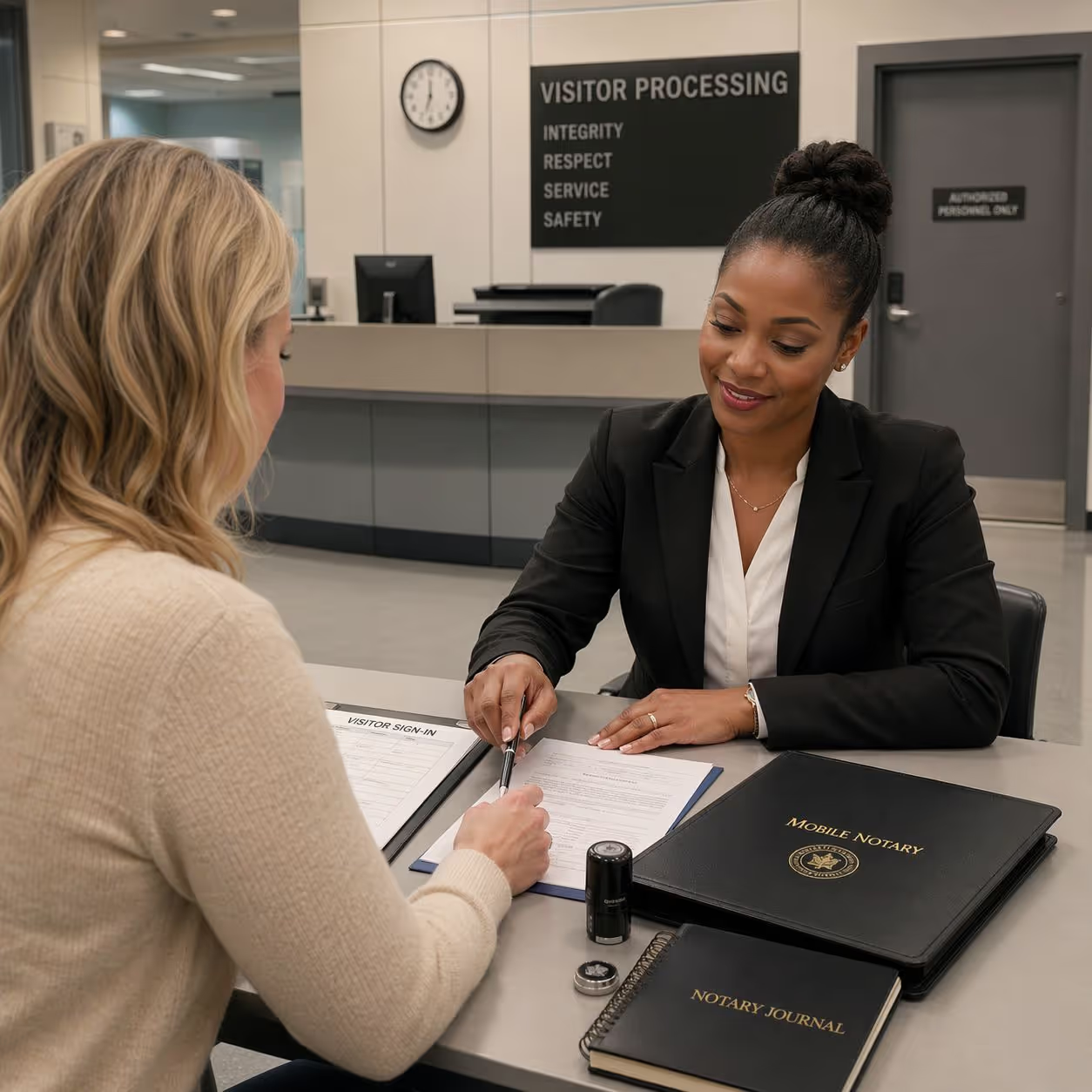
Lake Mead Mobile Notary provides safe deposit box witnessing and notarization for banks, credit unions, public administrators, and estate professionals throughout Las Vegas and Henderson.
Under Nevada law and institutional policies, certain safe-deposit box openings must occur in the presence of a bank officer and a notary, with a documented inventory of contents and a certificate reciting the name of the lessee, the date of opening, and a list of items found.
Our role is to attend scheduled box openings, work alongside the institution’s officer, observe and record the contents as directed, and complete the required notarial certificates and sealed packages when statutes or policies require them.
Before requesting this service, institutions and estate representatives should confirm who is authorized to access the box, whether a court order or probate petition is needed, what may be removed, and how drilling or opening costs will be handled.
Service Context
Safe Deposit Box Witnessing Overview
Neutral participation in institution-directed safe-deposit box openings.
Safe-deposit boxes are governed by Nevada statutes, bank policies, probate rules, and court orders.
When rental is unpaid or a lessee dies, institutions may be required or permitted to open the box with a bank officer and a notary present, inventory contents, and document what is found for later estate administration or account resolution.
We support these events as neutral mobile notaries, working under the bank or credit union’s procedures and any applicable court or probate guidance.
Our focus is on the notarial act and witnessing duties. Decisions about opening, drilling, access rights, and disposition of property remain with institutions, courts, and legal professionals.
Who Uses This Service
Who Safe Deposit Box Witnessing Is For
Designed for institutions and professionals managing sensitive box openings.
Banks and credit unions
Branches that require a notary and neutral witness when opening safe-deposit boxes for nonpayment, death, or compliance reasons.
Public administrators
Public officials accessing boxes after a death to locate wills or disposition instructions under Nevada law.
Probate and estate attorneys
Legal teams who coordinate box access and inventory as part of estate and trust administration.
Court-directed box openings
Institutions responding to court orders that require supervised access, inventory, or limited removal of documents.
Financial compliance teams
Internal compliance staff that need independent documentation when boxes are drilled or opened.
Estate representatives working with institutions
Executors or trustees who arrange box openings through banks and rely on the institution to set procedures.
Opening Scenarios
Safe Deposit Box Opening Scenarios
Different situations call for different access rules.
Rental nonpayment
Boxes opened after required notices when rent is unpaid, with a bank officer and notary present and contents inventoried and sealed as procedures require.
Post-death inspections
Access by public administrators or similar officials to search for wills or instructions for disposition after a lessee’s death.
Court-ordered access
Openings directed by court orders in probate or civil cases, with strict limits on what may be removed.
Inventory-only searches
Events where contents are listed and documented but not removed until estate authority or court approval is in place.
Drilling and forced openings
Drilling arranged by the institution when a key is unavailable, with costs charged to the estate or account as policies specify.
Joint lessee and trust boxes
Situations where surviving co-lessees or trustees have different access rights based on bank policies and governing documents.
Appointment Preparation
What to Coordinate Before a Safe Deposit Box Opening
Thorough preparation supports compliant and efficient box openings.
Confirm legal authority
Bank officers, public administrators, and estate professionals should verify that required notices, court orders, or probate documents are in place.
Review institution policies
Determine how the bank or credit union handles drilling, inventory, and limits on removing contents in your scenario.
Arrange keys or drilling
Coordinate keys, locksmiths, or drilling services so the box can be opened safely during the appointment.
Clarify inventory instructions
Provide written guidance on how items should be listed, grouped, described, and whether photographs or copies are needed.
Identify participants
Confirm which bank officer, public official, and estate representative will attend, and ensure they bring necessary identification.
Plan for follow-up and storage
Decide where sealed packages, certificates, or copied documents will be stored and how information will be shared with the court or estate.
On-Site Process
On-Site Safe Deposit Box Witnessing Process
A structured process for secure vault appointments.
1
Coordinate with the institution
The bank or credit union confirms time, location, participants, and the applicable legal basis for the box opening.
2
Prepare the vault area
Branch staff arrange access to the vault or safe-deposit box area and ensure keys or drilling services are ready.
3
Open the box with officer and notary present
The box is opened under the supervision of a bank officer, with the notary present to observe and document according to instructions.
4
Inventory contents
Items are listed and described, and any required photographs or copies are made following bank and legal guidance.
5
Complete certificates and seals
The notary and officer sign certificates reciting the name of the lessee, date of opening, and list of contents, and seal packages when procedures require it.
6
Return to institutional and legal processes
Certificates and sealed packages are handled according to bank, probate, or court procedures; we do not manage distribution or filing beyond the notarial act.
Documentation
Certificates, Inventory Lists and Sealed Packages
Accurate documentation helps reduce disputes later.
When statutes or policies require it, the notary and bank officer complete certificates that include the lessee’s name, the date the box was opened, and a detailed list of contents.
In some scenarios, contents are placed in sealed packages labeled with identifying information, and certificates are enclosed or stored with institutional records.
We work with institutions to ensure that certificates are legible, complete, and consistent with their compliance expectations.
Decisions about how certificates and packages are stored, who receives copies, and how courts or estates use them belong to institutional and legal authorities.
Lessee and date information
Certificates clearly identify the box, the lessee, and the date and location of the opening event.
Item descriptions
Inventory lists describe items in enough detail for institutions and estates to understand what was found.
Sealed packaging
Packages are sealed and labeled according to institutional or statutory requirements when contents must be secured.
Record retention
Institutions decide how long certificates and inventories are kept and who may access them.
Service Questions
Safe Deposit Box Witnessing Questions
Clarifying how our role fits into box access and estate work.
Can you authorize access to a safe-deposit box or order it to be opened?
No. Only banks, credit unions, courts, public administrators, or other authorized officials can approve box access or order openings.
Can you decide what items may be removed from the box?
No. Removal decisions follow statutes, court rules, and institution policies. We may help document contents, but we do not control what leaves the box.
Can you advise heirs or estate representatives on how box contents should be distributed?
No. Distribution of property is a legal and estate-planning matter for attorneys, courts, and trustees, not for the notary.
Do you guarantee that your certificates will resolve all disputes about box contents?
No. Accurate documentation helps, but courts and institutions ultimately decide how to interpret records and resolve disputes.
Can you explain the bank’s safe-deposit box policies or change them?
No. Bank policies are set by each institution. We follow their procedures and cannot modify or interpret them on their behalf.
Will you provide legal advice about probate or estate issues related to the box?
No. Questions about probate, estate administration, or legal strategy must be answered by attorneys or court self-help services.
Need professional photos for your property listing?
.avif)

.avif)