Mobile Notary for Company and Insurer Authorization Letters for Vehicle Release in Las Vegas
Lake Mead Mobile Notary provides mobile company and insurer authorization letter notarization when tow and impound yards require a signed, notarized letter on official letterhead before releasing a company-owned or insured vehicle.
Common clients include fleet management companies, rental car agencies, corporate businesses, and insurance carriers authorizing specific employees, drivers, adjusters, or agents to retrieve vehicles from impound or storage facilities.
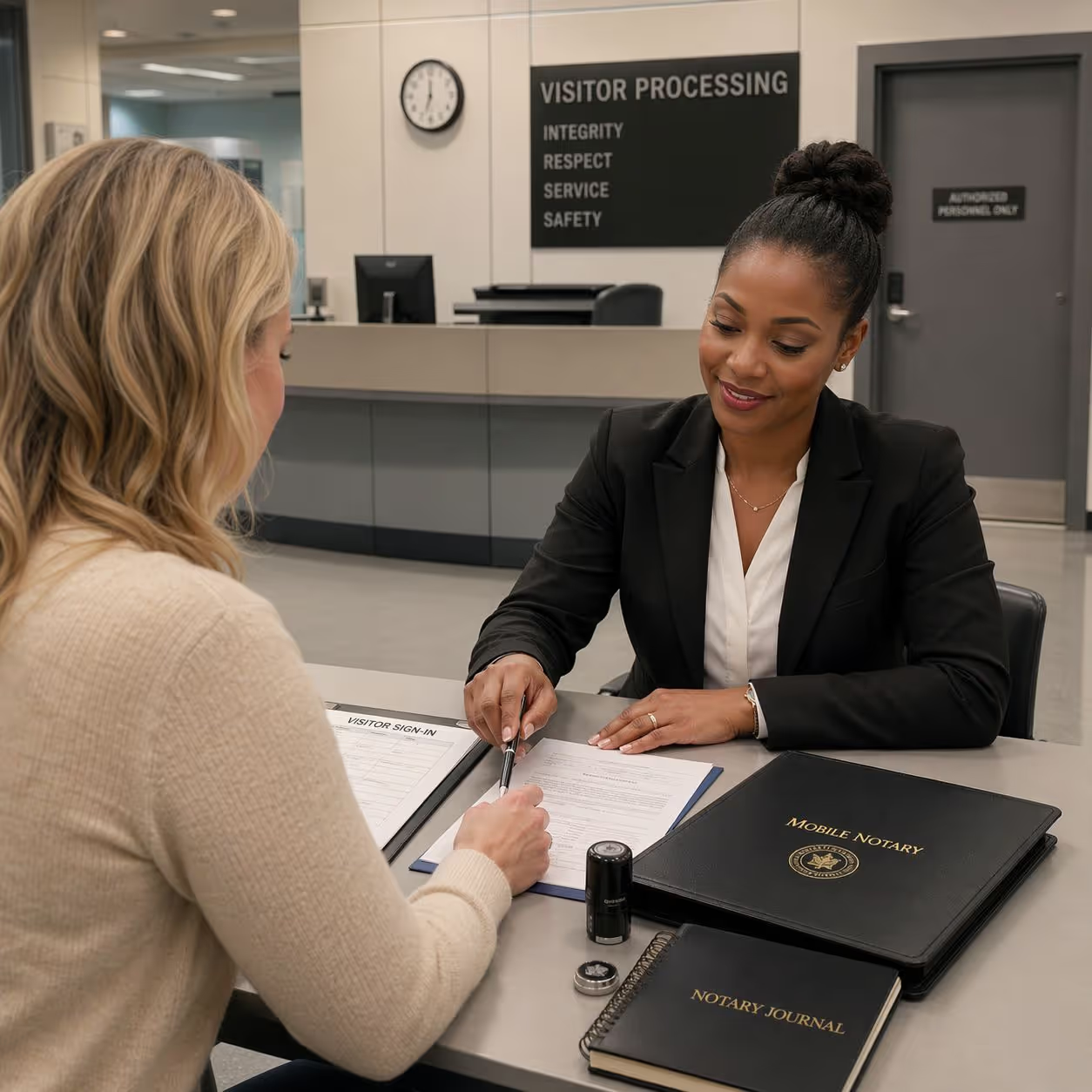
At each appointment, the notary verifies the identity of the authorized signer, confirms that the authorization letter is presented on official company or insurer letterhead, and completes the appropriate Nevada notarial certificate on the document.
Before scheduling, organizations should confirm which yard is holding the vehicle, which representative will be authorized to retrieve it, who within the company or insurer has authority to sign, and what vehicle details and internal records the yard expects to see on the letter.
Corporate & Insurance Context
When Companies and Insurers Use Authorization Letters for Vehicle Release
Authorization letters document who may act on behalf of an organization when a vehicle is retrieved from an impound or tow yard.
When a company-owned or insured vehicle is impounded or stored at a tow yard, organizations often need to authorize specific employees, contractors, or agents to retrieve the vehicle on their behalf.
Tow and impound yards may require a written authorization letter on official company or insurer letterhead that names the authorized person, describes the vehicle, and explains that the organization is permitting that person to act in a limited capacity for vehicle release.
These letters help yards verify that the person presenting identification and requesting release is recognized by the organization, but yard staff, lienholders, and relevant agencies still decide whether release is permitted under their policies and any applicable law.
Notary Role
What the Notary Does—and Does Not Do—for Authorization Letters
The notary focuses on identity verification and completion of lawful notarial acts on organization-supplied letters.
When an authorization letter includes a notarial certificate, the notary verifies the identity of the signer, ensures the certificate reflects a lawful Nevada notarial act, and completes the acknowledgment or jurat on the organization’s letter.
The notary does not draft authorization language, does not decide who within the organization has authority to sign, and does not determine whether the letter meets yard, corporate, or insurance policies. These decisions belong to the organization, yard staff, and advising professionals.
After the notarial act is completed, the notarized letter is returned to the organization so its representative can present it, along with identification and any other required documents, to yard staff according to established procedures.
Related Documents
Documents Commonly Involved Around Vehicle Release Authorization Letters
Authorization letters often appear alongside other corporate, insurance, and vehicle-release documents.
Company authorization letters on letterhead
Letters issued by businesses that identify an authorized representative, describe the vehicle, and state that the representative may retrieve the vehicle on the company’s behalf.
Insurer authorization letters on letterhead
Letters from insurance carriers authorizing adjusters, vendors, or other representatives to collect an insured vehicle from a tow or impound yard.
Corporate resolutions or internal authority records
Documents such as board resolutions or internal policies that describe who may sign for the organization and under what circumstances.
Impound and storage records from the yard
Case sheets and internal records that reference the vehicle’s plate, VIN, fees, and status under yard policies.
Related non-owner release and authorization forms
Separate forms used when someone other than the registered owner retrieves the vehicle, which may work together with the organization’s authorization letter.
Vehicle powers of attorney and DMV or lien documents
Selected DMV, lien, or power-of-attorney forms that may be required for title, lien, or registration processes distinct from the yard’s release decision.
Appointment Preparation
What Companies and Insurers Should Prepare Before Notarization
Clear preparation helps authorization letters support vehicle release decisions effectively.
Draft the authorization letter on official letterhead
Prepare the letter on company or insurer letterhead, naming the authorized representative and including vehicle details such as plate, VIN, and yard location according to organizational and yard requirements.
Identify an appropriate signer
Determine who within the organization has authority to sign, such as a fleet manager, claims director, officer, or other authorized representative under internal policies.
Gather proof of signatory authority
Collect records that demonstrate the signer’s role and authority, which may include business cards, organizational charts, or corporate governance documents when requested.
Confirm vehicle and yard details
Verify the vehicle’s identifying information and the yard’s case or reference numbers so they can be described accurately in the letter.
Arrange for the authorized signer’s identification
Ensure the person signing the letter will be present at the appointment with valid, unexpired government-issued photo identification.
Coordinate timing with yard and fleet or claims operations
Schedule the notarization appointment and vehicle pickup window so they align with yard hours and internal fleet or claims procedures.
Mobile Corporate Notary Process
How Mobile Notarization of Company and Insurer Authorization Letters Works
A structured process helps organizations document vehicle-release authority clearly.
1
Draft the authorization letter
The organization drafts the authorization letter on official letterhead, naming the authorized representative and describing the vehicle and yard according to internal and yard requirements.
2
Confirm signer authority and documents
Internal teams confirm that the signer has authority to issue the authorization and gather any supporting records they may need to provide to the yard.
3
Schedule the mobile notary appointment
The organization schedules a mobile notary visit at the office, an insurance location, or a convenient meeting point, ensuring the signer and letter will be ready.
4
Verify identity and sign the letter
At the appointment, the notary verifies the signer’s identity using government-issued photo identification and the signer executes the authorization letter in accordance with the notarial certificate.
5
Notary completes the certificate
The notary completes and signs the notarial certificate, affixes the official seal, and returns the notarized letter to the organization.
6
Present the letter to yard staff
The authorized representative presents the notarized letter, identification, and any other required documents to yard staff and follows yard procedures for vehicle release.
Yard, Fleet & Insurance Considerations
How Yard Policies, Fleet Procedures, and Insurance Processes Interact with Authorization Letters
Authorization letters sit within larger operational and compliance frameworks.
Vehicle-release decisions often involve yard policies, fleet procedures, and insurance processes. Yards may have specific requirements for who may retrieve vehicles, how fees are handled, and what documentation they must see before releasing a vehicle.
Organizations may also have internal rules about who can authorize retrieval, how assets are tracked, and how insurance coverage is documented. Authorization letters should be consistent with these internal rules and any external requirements.
Additional documents, such as hold harmless agreements, non-owner release forms, powers of attorney, or lien sale affidavits, may be required as part of separate processes. Authorization letters complement these documents but do not replace them.
Service Questions
Company & Insurer Vehicle Release Questions
These questions clarify how authorization letters and notarization support vehicle release.
Does notarizing an authorization letter guarantee that the yard will release the vehicle?
No. Notarization verifies identity and completes a certificate on the letter, but yards and agencies decide whether to release vehicles based on their policies, fees, lien status, and any applicable law.
Who should sign a company or insurer authorization letter?
Organizations decide which officers, managers, or representatives have authority to sign. The notary records the role described in the certificate but does not decide who is eligible to sign for the organization.
Can the notary help draft the authorization letter or advise on corporate policy?
No. Drafting letters and interpreting corporate or insurance policies are outside the notary’s role. Internal teams or legal counsel must handle those tasks.
What if the authorized representative cannot meet at the corporate office?
Organizations may arrange field appointments where the notary meets the signer at a different location, as long as identity verification and document requirements are satisfied.
How do authorization letters relate to powers of attorney or non-owner release forms?
Authorization letters may work alongside powers of attorney or non-owner release forms. Each document serves a different purpose and may be required by different parties.
Do these letters affect DMV title, lien, or registration records?
Authorization letters focus on vehicle release from yards. DMV title, lien, and registration outcomes are managed by separate agencies and processes.
Need professional photos for your property listing?
.avif)

.avif)