Mobile Notary for Hold Harmless and Indemnity Agreements at Tow and Impound Yards in Las Vegas
Lake Mead Mobile Notary provides mobile hold harmless and indemnity agreement notarization for vehicle owners and authorized parties when tow and impound yards require a signed, notarized release before returning a vehicle.
Common situations include lost vehicle titles, missing or unavailable keys, non-owner retrieval under insurance or employer arrangements, and other complex circumstances where the yard requires a liability-release form as part of its vehicle-release process.
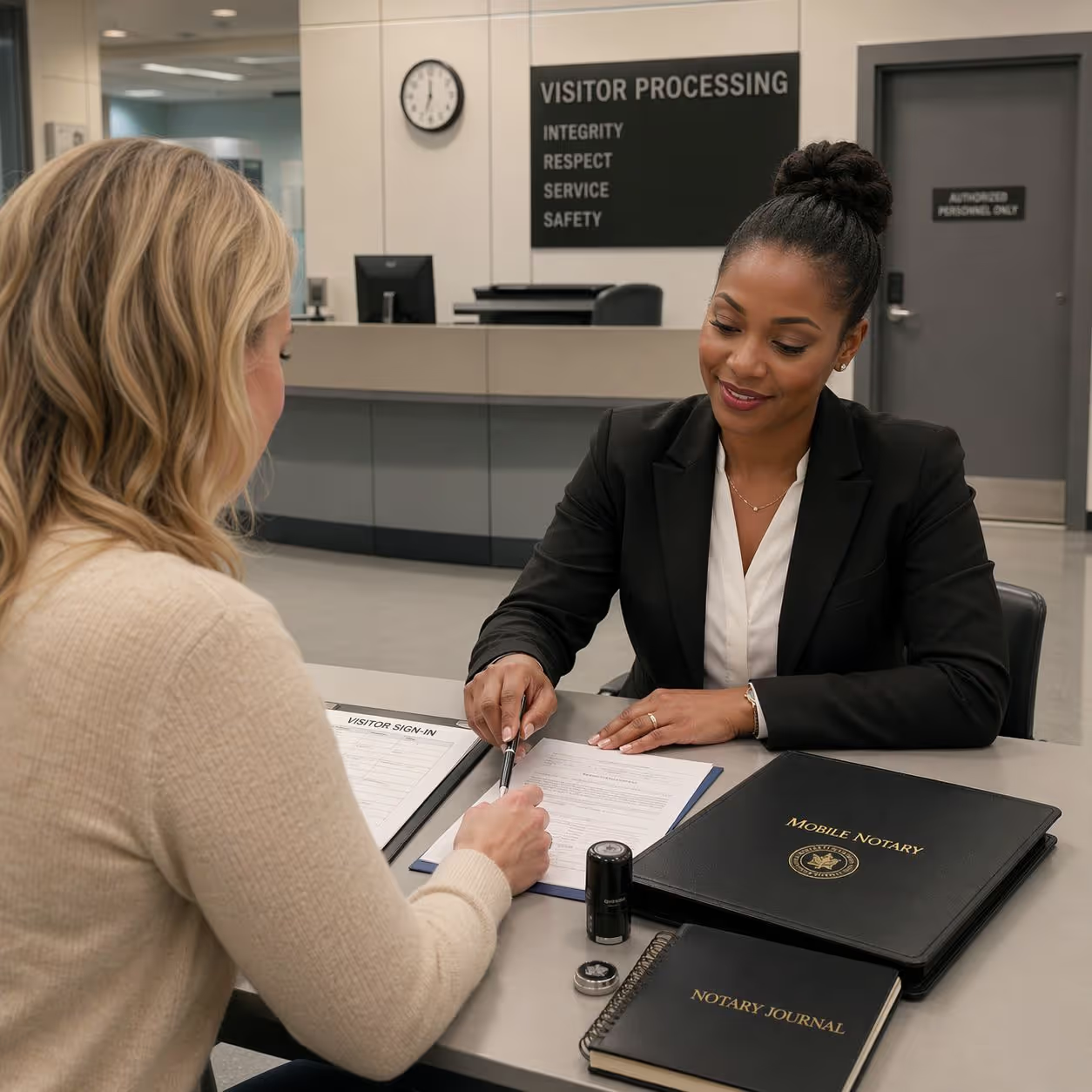
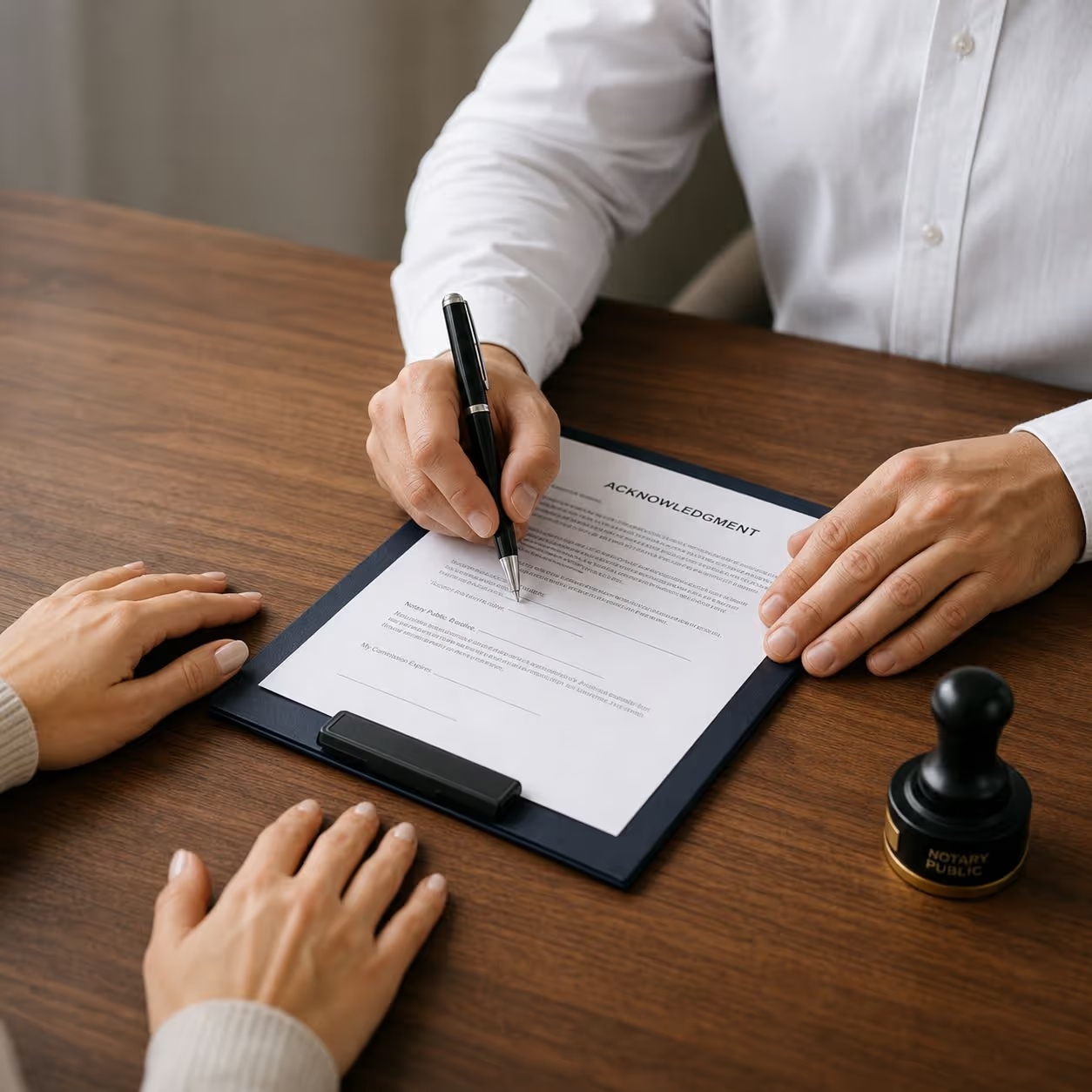
At each appointment, the notary meets customers at tow yards, impound lots, or storage facilities, verifies the identity of every signer, and completes the appropriate Nevada notarial certificate on the hold harmless or indemnity agreement supplied by the yard.
Before scheduling, customers should confirm with the yard which form is required, when the document must be presented, what identification is needed, and whether any additional conditions affect vehicle release, such as lien status, storage fees, or title issues.
Tow & Impound Yard Context
When Tow and Impound Yards Require Hold Harmless Agreements
Hold harmless and indemnity forms appear in specific vehicle-release situations defined by yard policies and applicable law.
Tow and impound yards manage vehicles under lien, storage, or enforcement situations and must follow their internal policies, contracts, and any applicable laws when deciding how and when a vehicle may be released.
In some scenarios—such as when a vehicle owner has lost the title, does not have keys, or when a third party retrieves a vehicle under insurance, employer, or other arrangements—the yard may require a signed hold harmless or indemnity agreement as one condition of release.
The agreement typically states that the signer assumes certain risks and releases the yard from specified future liability related to the vehicle. Whether an agreement is required, what it must say, and how it is used are decisions made by the yard and any advising professionals, not by the notary.
Notary Role
What the Notary Does—and Does Not Do—with Hold Harmless Agreements
The notary’s responsibilities focus on identity verification and completion of lawful notarial acts on yard-supplied forms.
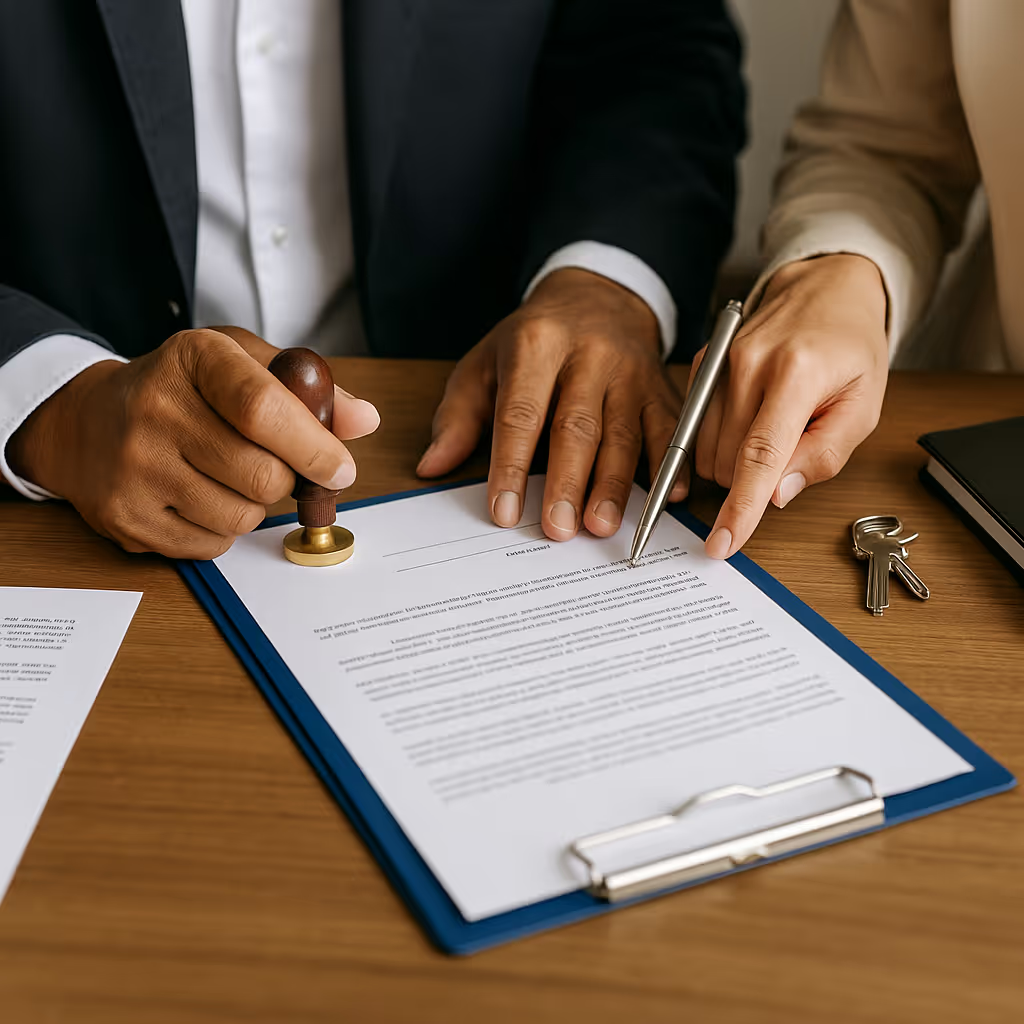
When a hold harmless or indemnity agreement includes a notarial certificate, the notary verifies the identity of each signer, ensures that the certificate language describes the requested lawful act, and performs the acknowledgment or jurat on the yard-supplied document.
The notary does not draft or revise the agreement, does not advise signers on whether they should sign, and does not interpret how the agreement affects lien status, storage fees, or future claims. Those questions must be addressed with attorneys, insurers, or other advisors.
After the notarial act is complete, the notarized document is returned to the signer so it can be presented to yard staff according to the yard’s procedures. Vehicle-release decisions remain entirely with the yard and any involved agencies.
Related Documents
Documents Commonly Involved in Vehicle Release
Hold harmless agreements often appear alongside other release, authorization, and DMV documents.
Hold harmless agreements
Yard-provided forms where the signer agrees to release the yard from specified liability related to the vehicle and its condition or circumstances of release.
Indemnity agreements or liability-release forms
Documents that describe how the signer will indemnify or hold the yard harmless for certain claims, often used when release occurs under unusual conditions.
Impound and storage records
Case sheets and internal records that reference vehicle details, lien notices, fees, and release status under yard policies.
Authorization letters and powers of attorney
Company, insurer, or individual authorization forms and vehicle powers of attorney used when someone other than the registered owner retrieves the vehicle.
DMV lien and sale documents
Selected DMV or lien forms related to the underlying title or lien status that may need notarization as part of separate processes, even when a hold harmless agreement is used.
Identification and supporting records
Government-issued photo IDs and any supporting documentation described by yard policies or related DMV or insurance processes.
Appointment Preparation
What to Bring to the Tow Yard or Storage Facility Appointment
Gathering the right documents before meeting the notary helps the release process move more smoothly.
Yard-supplied hold harmless or indemnity agreement
Obtain the exact agreement form from the tow yard or impound lot and review any sections that mention notarization or witness requirements.
Vehicle details and case information
Have the vehicle’s plate number, VIN, and any case or reference numbers provided by the yard available for inclusion on the agreement.
Valid government-issued photo ID
Ensure each signer has valid, unexpired government-issued photo identification accepted by Nevada notary law.
Evidence of authority for non-owner retrieval
When someone other than the owner retrieves the vehicle, gather any authorization letters, powers of attorney, or insurer communications the yard requires.
Yard instructions about timing and presentation
Confirm with yard staff when the notarized agreement should be presented, whether any fees must be paid, and how the release will be documented.
Time reserved for questions with advisors
If signers have questions about the meaning or consequences of the agreement, they should speak with legal or insurance advisors before the notarization appointment.
Mobile Impound-Yard Process
How Mobile Hold Harmless Agreement Notarization Works
A clear sequence helps customers coordinate with yards and notaries for vehicle release.
1
Obtain the agreement from the yard
The tow yard or impound facility provides its hold harmless or indemnity agreement form and explains how it is used in their release process.
2
Complete vehicle and signer information
Fill in all requested details about the vehicle, case numbers, and signer information according to yard instructions, leaving signature fields as directed.
3
Schedule the mobile notary at the yard or nearby location
Arrange a meeting time at the yard, storage lot, or agreed nearby location and confirm which signers will attend and what identification they will present.
4
Verify identity and sign the agreement
During the appointment, the notary verifies each signer’s identity and the agreement is signed according to the requirements of the notarial certificate.
5
Notary completes the certificate and returns the document
The notary completes and signs the notarial certificate, affixes the official seal, and returns the notarized agreement to the signer.
6
Present the agreement to yard staff
The signer presents the notarized agreement to yard staff and follows the yard’s procedures for vehicle release, payment of fees, or additional documentation.
Yard, Lien & Title Considerations
How Yard Policies, Liens, and Titles Interact with Hold Harmless Agreements
A notarized agreement is one part of a broader vehicle-release decision.
Hold harmless agreements often appear alongside lien notices, storage-fee calculations, and title issues. Yards must balance their contractual obligations, storage policies, and any applicable statutes when determining whether release can proceed.
Some situations may require separate DMV forms, lien sale affidavits, or title-related documents in addition to a hold harmless agreement. Vehicle owners and authorized parties should ask yard staff and advisors what documents and steps are necessary.
The notary’s involvement is limited to the documents that specify a notarial act. Questions about lien rights, title transfers, or enforcement procedures must be directed to the appropriate agencies, attorneys, or professionals.
Service Questions
Vehicle Release Hold Harmless Questions
These questions explain how this service fits within tow yard and impound procedures.
Does notarizing a hold harmless agreement guarantee that the yard will release my vehicle?
No. Notarization verifies identity and completes a certificate on the agreement, but tow and impound yards decide whether to release vehicles based on their policies, fees, lien status, and any applicable law.
Who should provide or draft the hold harmless or indemnity agreement?
The tow or impound yard typically supplies its own agreement form. If legal advice or custom language is needed, signers should consult an attorney rather than rely on the notary.
Can the notary explain what the hold harmless agreement means or how it affects my rights?
No. The notary cannot interpret contract terms or advise signers about legal consequences. Signers should review the agreement and consult legal or insurance professionals if they have questions.
What if the vehicle owner cannot attend the appointment?
When someone other than the owner retrieves a vehicle, yards may require authorization letters or powers of attorney in addition to a hold harmless agreement. The yard must confirm which documents are acceptable.
Can this service help with DMV title or lien issues?
This service focuses on notarizing hold harmless and indemnity agreements for yard release. Separate services and agencies handle DMV title transfers, lien sales, and related forms.
Where does the appointment usually happen?
Appointments commonly take place at tow yards, impound or storage lots, or nearby agreed meeting locations, depending on yard access procedures and customer preferences.
Need professional photos for your property listing?
.avif)

.avif)