Lien Sale Affidavits for Tow Yards and Repair Shops

Nevada DMV Lien Sale Affidavit VP-147 Notarization

Lake Mead Mobile Notary provides mobile VP-147 lien sale affidavit notarization for tow yards, mechanic shops, body shops, storage facilities and other lien claimants preparing Nevada lien sale packets for vehicles held for unpaid charges.

The Nevada DMV Lien Sale Affidavit (Form VP-147) is a sworn statement under penalty of perjury that the lienholder followed the required notice, publication and sale procedures before selling a vehicle to satisfy a statutory lien.

For VP-147 to be accepted as part of a lien sale packet, the affidavit must be completed with accurate business, vehicle, charge and sale information, signed with original ink by an authorized representative and accompanied by supporting documents such as inspection certificates, title fees, certified mail records and publication proof.

Before scheduling notarization, lien claimants should review Nevada lien sale requirements, confirm that statutory notice and timing obligations have been met, and assemble the documentation they will submit with VP-147 to the Department.

Usage Context

How Nevada Uses VP-147 Lien Sale Affidavits

VP-147 sits at the center of the lien sale packet for vehicles held for unpaid charges.

VP-147 is the lien sale affidavit that Nevada DMV requires when a business sells a vehicle to satisfy a statutory lien after providing towing, storage, repair or related services.

The affidavit forms part of a lien sale packet that also includes title fees, inspection or appraisal forms, owner notification records and publication proof, all submitted to the Department’s titles section for review.

By signing VP-147, the lien claimant certifies under penalty of perjury that they followed the required notice and sale procedures and assumes responsibility for the accuracy of the information provided.

Signer Responsibilities

Lien Claimant and Authorized Signer Responsibilities

The person signing VP-147 is certifying more than just a single form.

On VP-147, the lien claimant is the business holding the vehicle for unpaid charges, such as towing fees, storage, repairs or related services.

An authorized representative of the lien claimant signs the affidavit, certifying that the business followed the required notice and sale procedures and that the information in the packet is complete and accurate.

The signer should have documented authority to act for the business, and supporting records such as business licenses, registrations or resolutions are often used to demonstrate that authority.

Affidavit Contents

What VP-147 Records and Why It Matters

Each section of VP-147 tells part of the lien sale story.

  • Lien claimant and business information

    VP-147 records the lien claimant’s name, business license or registration number and address, identifying who is asserting the lien and conducting the sale.

  • Vehicle description

    The form includes the vehicle identification number, year, make, model and other key descriptors, linking the lien sale to a specific vehicle.

  • Charges and lien amount

    VP-147 lists the charges that created the lien, such as towing, storage, repairs or supplies, and records the total amount claimed.

  • Sale details

    The affidavit captures sale information, including date of sale, purchaser details, sale amount, taxes collected and odometer reading statements.

  • Notice and publication dates

    The lien claimant records dates of certified mail notices and first newspaper publication, supporting compliance with notice and publication requirements.

  • Certification and release language

    The signer certifies that the lien sale followed applicable laws and agrees to release and hold harmless the Department regarding contests of the lien or sale validity.

Appointment Preparation

What Tow Yards and Shops Should Prepare

Preparing your paperwork before the notary visit keeps your lien sale on track.

  • Review lien sale requirements and timelines

    Confirm that notice to owners, notice to the Department, publication and sale timing match current lien sale guidance and statutory requirements.

  • Complete VP-147 fields before the visit

    Fill in business, vehicle, charges, sale and notice information on VP-147 carefully, leaving the signature and notary sections blank until notarization.

  • Gather business and authority documents

    Have business licenses, registrations or corporate documents ready to show that the signer is authorized to act for the lien claimant.

  • Organize invoices and storage records

    Prepare itemized invoices, storage logs and tow bills documenting how the lien amount was calculated.

  • Collect notice and publication proof

    Arrange certified mail receipts, returned letters and newspaper publication proof in a way that aligns with lien sale requirements.

  • Confirm signer identification

    Ensure the authorized representative has valid government-issued photo ID available at the appointment.

On-Site Process

VP-147 Lien Sale Affidavit Notarization Process

A clear sequence supports accurate and timely lien sale affidavits.

  1. Complete VP-147 details without signing

    The business fills in lien claimant, vehicle, charge, sale and notice information on VP-147, leaving the signature and notary sections blank.

  2. Schedule a mobile notary visit

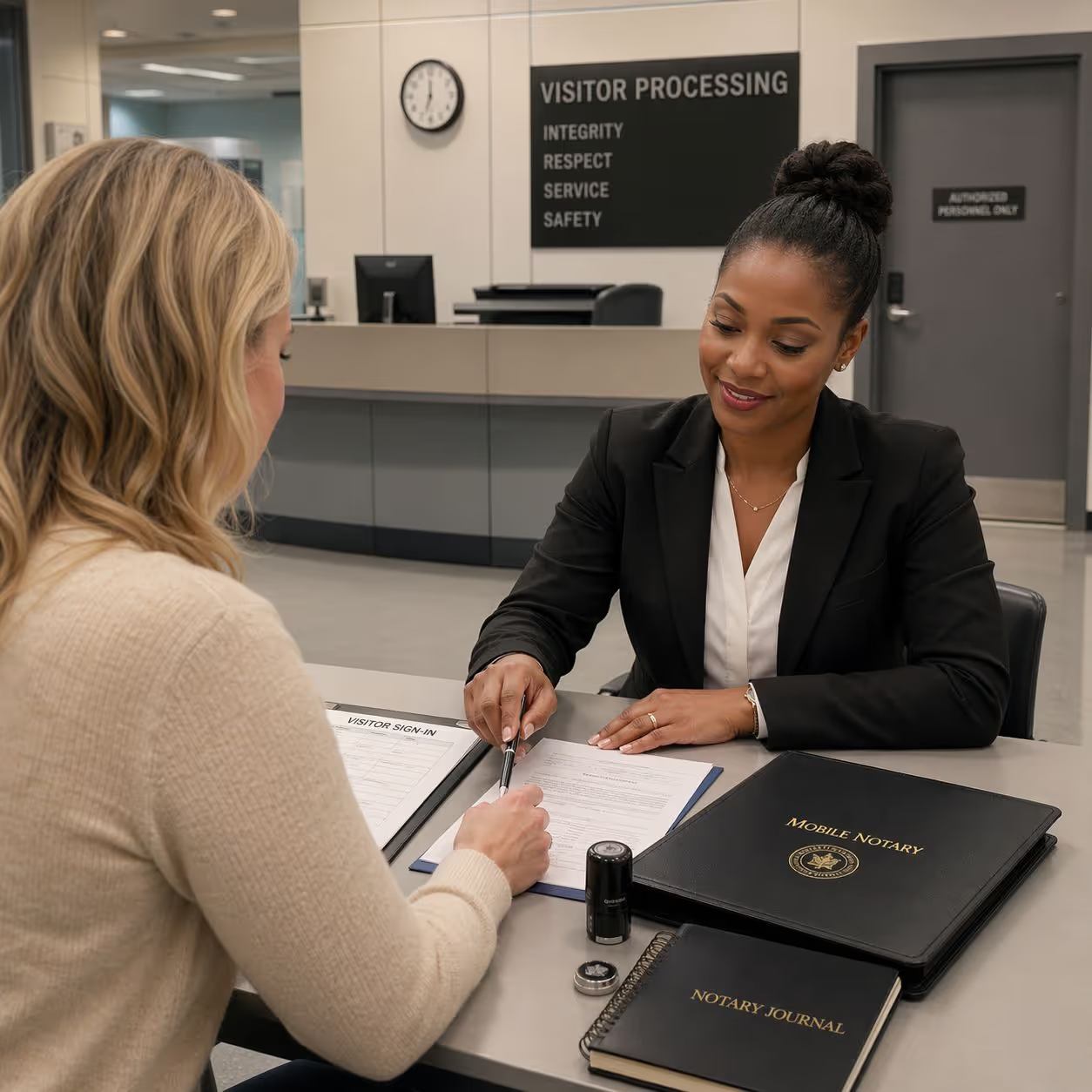
    An appointment is arranged at the tow yard, repair shop or storage facility so the authorized representative can sign VP-147 on site.

  3. Verify identity and authority

    At the appointment, the notary reviews the signer’s government-issued ID and, when appropriate, supporting documents showing authority to act for the business.

  4. Administer oath and sign under penalty of perjury

    The notary administers an oath or affirmation, and the authorized representative signs VP-147 with an original ink signature in the notary’s presence.

  5. Complete the jurat certificate

    The notary fills out the jurat section, records the date and location, and applies the official Nevada notary seal, making VP-147 ready for inclusion in the lien sale packet.

  6. Submit the lien sale packet to DMV

    The lien claimant then submits VP-147, supporting documents and required fees to the Department according to current lien sale instructions.

Regulatory Considerations

Statutory and DMV Lien Sale Considerations

VP-147 interacts with lien law, notice rules and sale standards.

Nevada lien sale rules describe how and when owners must be notified, when notice must be given to the Department and how publication and auction or permitted private sale must be conducted.

These rules require, among other things, that the lien sale be commercially reasonable, that sale notices be properly published and that certified mail attempts be documented as part of the lien sale packet.

VP-147 supports this framework by providing a sworn statement that these steps were followed, but businesses should continue to rely on official guidance and legal advice when interpreting and applying lien sale requirements.

Service Questions

VP-147 Notarization Questions

These questions focus on how notarization fits into lien sale affidavits.

Does notarizing VP-147 mean the lien sale fully complies with Nevada law?

No. Legal compliance depends on following lien statutes and guidance. Notarization confirms the sworn statement, not the underlying procedures.

Who decides whether a lien sale is appropriate for a particular vehicle?

Lien claimants and their advisers determine whether a lien sale is appropriate under applicable law and regulations. The notary does not make that decision.

Can the notary explain lien sale timelines or how to conduct an auction?

No. Those topics must be addressed through official guidance or legal counsel. The notary focuses on identity verification, oath administration and completing the VP-147 jurat.

Is it acceptable to submit a VP-147 with altered or corrected entries?

No. VP-147 warns that alteration or erasure can void the affidavit. Businesses should complete a clean form when corrections are needed.

Will DMV accept every VP-147 affidavit that has been notarized?

Acceptance decisions belong to the Department. Notarization is one requirement, but packets are reviewed under DMV and statutory standards.

Can multiple vehicles be handled during one notarization visit?

With proper scheduling, businesses may complete and notarize more than one VP-147 at the same visit, provided each affidavit is accurate and properly signed.

Need professional photos for your property listing?

Real Estate PhotographyProperty Video & Walkthroughs

Need professional documentation services?

Professional Photography ServicesAdmin Support for Realtors

Need branding for your new business?

Realtor Headshots & BrandingReal Estate Websites & SEO

related services

Featured Locations