.avif)
Direct Answer
The Vehicle Owner Grants the Authority and Signs Under Oath
The Practical Answer
VP-136 is completed for one described vehicle and signed by the person granting authority—not by the appointed agent.
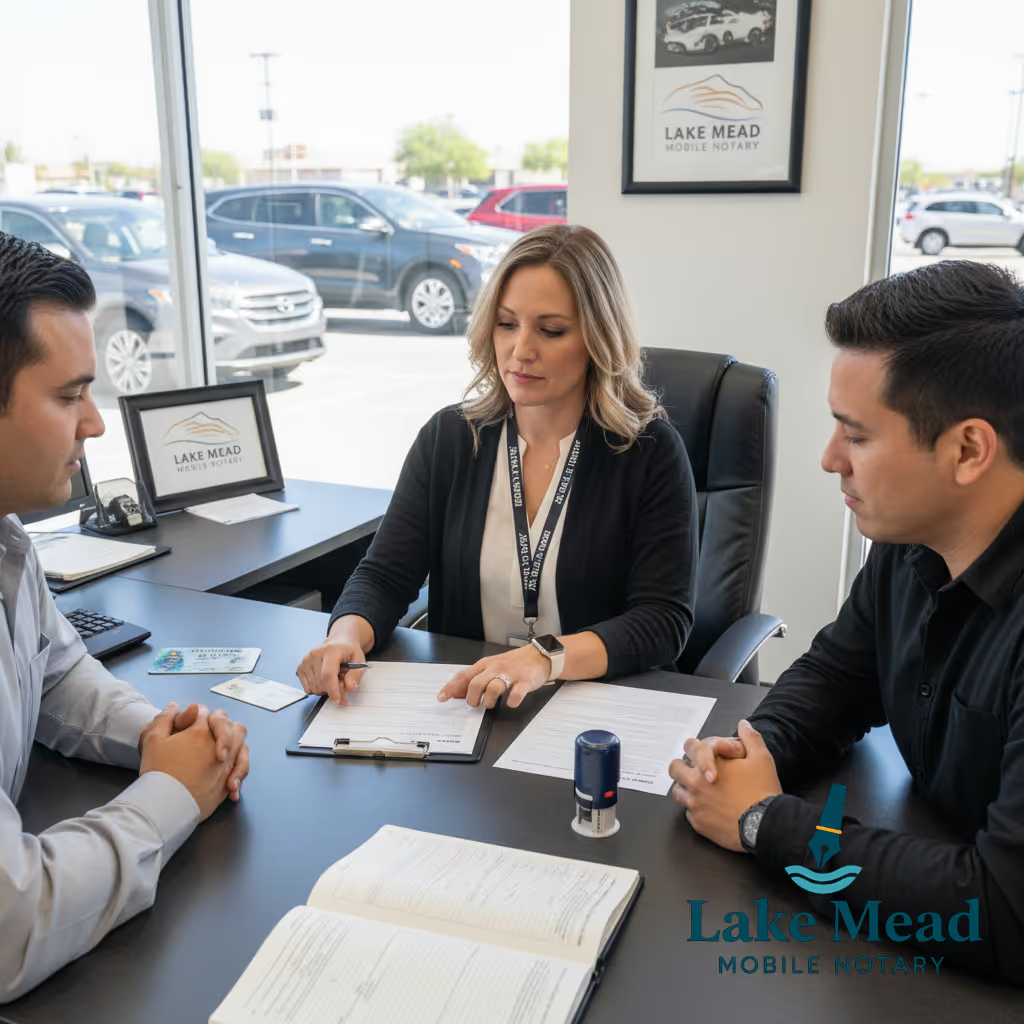
The form's certificate says “Subscribed and sworn,” making the required notarial act a jurat. The signer must personally appear, provide satisfactory evidence of identity, take an oath or affirmation, and sign in the presence of the notary public or authorized Nevada DMV representative.
The current form also states that signatures must be original, ordinary photocopies are not acceptable, and changes may not be made after the form has been signed and witnessed. It expressly prohibits using VP-136 to disclose a vehicle's odometer reading.
Notarization completes the sworn-signature portion of a prepared VP-136. Nevada DMV and the receiving organization still control the transaction documents, title records, required supporting evidence, use of originals or certified copies, and final acceptance.
Prepared VP-136 Form
Have the Owner, Vehicle Details, and Agent Information Ready?
Schedule a mobile notary appointment for a prepared VP-136. Include the signer name, appointment location, deadline, and any written DMV, dealer, lienholder, attorney, or recipient instructions with the booking.
Form Purpose
What Nevada DMV Form VP-136 Authorizes
The form appoints an attorney-in-fact to act for the registered or legal owner in relation to the vehicle described on the form.
One Vehicle
Vehicle-specific authority
VP-136 identifies the vehicle by year, make, model, and vehicle identification number. The authority is tied to that described vehicle rather than every vehicle owned by the principal.
Named Agent
Attorney-in-fact designation
The registered or legal owner names the person or firm authorized to act. The appointed agent later exercises only the authority granted by the form and applicable DMV rules.
DMV Documents
Title and registration paperwork
The form authorizes the attorney-in-fact to sign applicable title and registration documents within the scope described by the form and accepted by Nevada DMV.
Not Legal Advice
The principal chooses the agent and authority
The notary does not choose the attorney-in-fact, advise what powers to grant, interpret the legal effect of the appointment, or decide whether VP-136 is the correct form for the transaction.
Signing Rules
The Form Uses a Jurat, Not an Acknowledgment
Prepare the non-notarial fields
The principal confirms the owner, attorney-in-fact, vehicle, address, and identification-related information before signing. The notary does not complete transaction terms for the customer.
Personally appear
The person granting the authority must appear before the notary public or authorized Nevada DMV representative. The agent has no signature line on VP-136.
Establish identity
The notary must have personal knowledge or satisfactory evidence that the appearing signer is the person named in the form.
Take the oath or affirmation
A jurat requires the notary to administer an oath or affirmation regarding the truthfulness of the signed statement.
Sign in the notary's presence
The principal signs the original form during the appointment. A previously signed form is not ready for this jurat.
Complete the certificate and record
The notary completes the venue and jurat, applies the official stamp, signs the certificate, and records the act in the notarial journal.
Originals & Copies
Use the Signed Original Unless the Recipient Confirms a Certified-Copy Route
Current Form Rule
Original signatures are required
- VP-136 states that signatures must be originals.
- Ordinary photocopies are not acceptable under the form's printed instructions.
- The form may not be changed after it has been signed and witnessed.
- The original should be preserved cleanly for the intended DMV transaction.
Transaction-Specific Exception
Certified copies require confirmation
- Nevada DMV guidance recognizes certified-copy treatment in certain power-of-attorney situations.
- An ordinary scan or photocopy is not the same as a properly certified copy.
- The required certification may depend on the transaction and the party retaining the original.
- Confirm the exact copy requirement with DMV or the receiving organization before relying on a copy.
Critical Limitation
VP-136 Cannot Be Used for Odometer Disclosure
The prohibition appears directly on VP-136. When a vehicle transaction requires an odometer disclosure, the title or another secure document identified by DMV must handle that step.
Nevada DMV's title guidance distinguishes a standard vehicle power of attorney from a secure power of attorney used in certain title-held-by-lienholder or lost-title situations. The notary should not convert VP-136 into an odometer document or advise the customer which secure transaction route applies.
Do not add mileage language
Adding handwritten odometer authority to VP-136 would conflict with the form's express limitation and may also violate the no-changes rule after signing.
Confirm the separate document
The owner, buyer, dealer, lienholder, or DMV should identify the required title, reassignment, or secure power-of-attorney document before the signing appointment.
Keep the assignments separate
A VP-136 jurat and any odometer-related signing are separate document requirements. One notarization does not replace the other transaction steps.
Before Booking
Prepare the Current Form Without Signing It
Confirm these details before the appointment
- Use the current VP-136 form and confirm that it is the document requested for the transaction.
- Identify the registered or legal owner who will grant the authority and personally appear.
- Complete and review the attorney-in-fact and vehicle information before signing.
- Verify the full vehicle identification number, year, make, and model against reliable records.
- Bring satisfactory evidence of the signer's identity.
- Keep the signature, date, jurat, notary signature, and stamp areas blank for the appointment.
- Confirm whether the recipient needs the signed original or has provided written certified-copy instructions.
- Resolve legal, title, ownership, authority, or form-selection questions before the notarial session.
Service Boundary
What the Notary Can and Cannot Do
Lake Mead Mobile Notary Can
Complete the VP-136 jurat
- Meet the person granting authority at an agreed Las Vegas-area location.
- Review the prepared form for notarial readiness and prohibited blanks or alterations.
- Identify the appearing signer through satisfactory evidence.
- Administer the oath or affirmation and observe the signature.
- Complete the jurat, stamp, signature, and journal record.
The Notary Does Not
Control the vehicle transaction
- Select the attorney-in-fact or define the authority being granted.
- Choose, draft, or complete the customer's legal or DMV transaction terms.
- Verify ownership, lien status, title history, VIN accuracy, or odometer information.
- Determine whether VP-136, a general power of attorney, or a secure power of attorney is required.
- Guarantee acceptance by DMV, a dealer, lienholder, auction, tow facility, attorney, or other recipient.
Common Questions
Nevada DMV VP-136 Notarization Questions
Who signs Nevada DMV Form VP-136?
The registered or legal owner granting the authority signs VP-136. The appointed attorney-in-fact is identified on the form but does not sign the power-of-attorney certificate.
Does the agent need to attend the notary appointment?
Not for the VP-136 jurat itself. The agent has no signature line on the form. Another document, transaction, or recipient may create a separate attendance requirement.
Can the owner sign VP-136 before meeting the notary?
No. The form uses sworn jurat wording. The owner must sign in the notary's presence after taking an oath or affirmation.
Is VP-136 an acknowledgment?
No. The current form says “Subscribed and sworn,” which is jurat wording. The notary administers an oath or affirmation and observes the signature.
Can I use a photocopy of VP-136?
The form states that signatures must be originals and ordinary photocopies are not acceptable. Nevada DMV guidance recognizes certified copies in certain power-of-attorney situations, so confirm the exact original-or-certified-copy rule for the intended transaction.
Can VP-136 be used to disclose mileage?
No. The form expressly states that it may not be used to disclose a vehicle's odometer reading.
Can I correct the form after notarization?
No. VP-136 states that changes may not be made once the form is signed and witnessed. Review the information before the jurat begins.
Does VP-136 have a fixed expiration date?
The current public form does not print a fixed expiration date. Nevada DMV's title guide states that a power of attorney becomes null upon the death of the person who granted it, and use remains subject to the authority granted and recipient requirements. Confirm current acceptance for an older form directly with the receiving authority.
Does notarization guarantee DMV acceptance?
No. Notarization completes the sworn-signature requirement. DMV controls form selection, title and registration records, supporting documents, transaction eligibility, and acceptance.
Vehicle Power of Attorney Notarization
Ready With an Unsigned, Completed VP-136?
Schedule a Las Vegas-area mobile appointment for the person granting the vehicle power of attorney to complete the required jurat.


.avif)


