.avif)
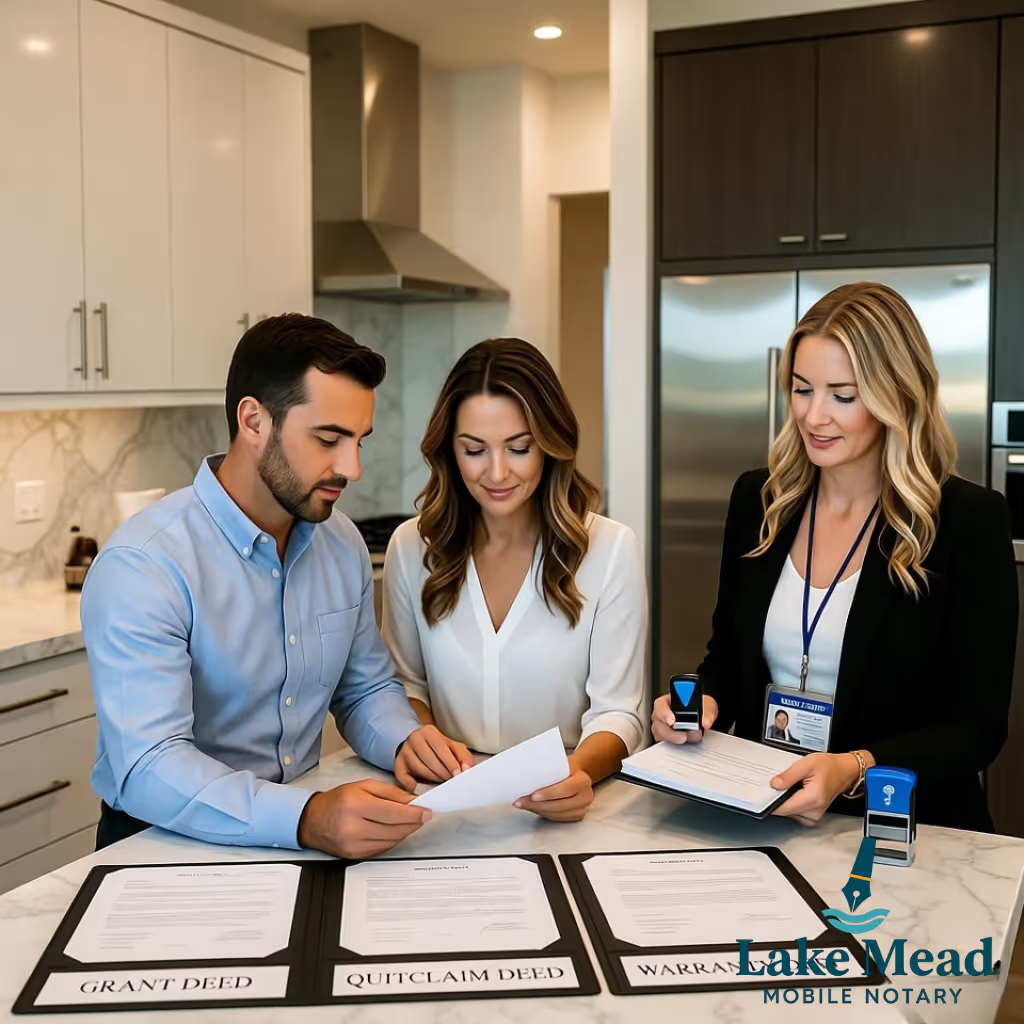
In Nevada, “grant deed,” “quitclaim deed,” and “warranty deed” are often used interchangeably in conversation, but they do very different jobs when you look at the fine print. The type of deed you choose affects how much title protection the new owner receives, whether a lender or title company will accept the transfer, and how much risk the grantor is actually promising to take on. This guide compares each deed under Nevada rules, with plain‑language examples drawn from real Las Vegas recordings so homeowners know which form to ask their attorney or title company about before scheduling notarization.
In Nevada, grant deeds, quitclaim deeds, and warranty deeds can all transfer real estate, but they offer very different levels of protection for the new owner and are treated differently by lenders and title companies.
A typical Las Vegas homeowner will see all three names when talking to agents, attorneys, or family, yet only one deed type may actually fit the transaction that is happening at the kitchen table in North Las Vegas, Summerlin, or southeast Henderson. Lake Mead Mobile Notary focuses on notarizing properly prepared deeds across Clark County so that once you pick the correct form with your title company or attorney, the signing and recording steps stay smooth and predictable.
This comparison breaks down how each deed works under Nevada practice, which one buyers and lenders expect, and how mobile notarization fits into clean recordings at the Clark County Recorder.
On the surface, every deed just looks like a form that moves property from one name to another, but the language in the middle paragraphs decides whether the new owner can come back later if a title problem appears. A first-time buyer purchasing a house near the Arts District expects more protection than a parent gifting a rental in McNeil Estates to an adult child.
Nevada is a “recording” state, so once the deed is signed, notarized, and recorded in the right county, it becomes the official public record of who owns the property. Choosing the wrong deed type can create avoidable risk, from lender pushback at closing to title-insurance exceptions when you try to sell or refinance later.
Use this structured view to see how each deed behaves in a typical Clark County transaction. Always confirm final wording with your Nevada attorney or title company before signing.
| Deed | Key Promise | Common Uses in Nevada | Risk Level for New Owner | Nevada Practice Notes |
|---|---|---|---|---|
| Grant Deed | Implied promise that the grantor has not already transferred the same interest and that title is only subject to recorded liens and encumbrances. | Adding or removing a spouse, moving property into or out of a revocable trust, family transfers, and some investor-to-investor deals where the parties already know the property history. | Moderate protection. Stronger than a quitclaim because of implied covenants, but usually not as robust as a full warranty deed. | Nevada often uses “grant, bargain and sale” language that functions similarly to a grant deed. Many Clark County title companies accept this form for non-lender family transfers when they are comfortable with the chain of title. |
| Quitclaim Deed | No promises about ownership or liens. The grantor simply transfers whatever interest they may have, if any, and the grantee takes title “as is.” | Divorce property settlements, removing a former spouse from title, clarifying potential heir claims, or cleaning up older deeds where the parties just want to release any interest. | Highest risk for the new owner because there are no warranties to rely on if a hidden defect appears later. | Lenders and title insurers for Las Vegas purchase and refinance deals may refuse quitclaim deeds for the main transfer, preferring a warranty or grant deed prepared by escrow. Quitclaims are more common for internal clean-up, not new money sales. |
| Warranty Deed (General) | Express promise that the grantor is conveying good title, free from undisclosed encumbrances, covering the entire history of the property not just the grantor’s period of ownership. | Standard buyer-seller closings where a lender and title company are involved, especially for owner-occupied homes and many investment purchases. | Strongest protection, because the buyer can potentially sue on the warranties if a covered title defect surfaces after closing. | In a typical financed purchase near North Las Vegas or Summerlin North, the title company prepares a warranty deed for signature at the closing table and sends the notarized original for recording. |
| Special Warranty Deed | Express promise that the grantor has not created any undisclosed title problems during their own ownership, but no guarantee about defects that existed before they bought the property. | Builder sales, some REO or bank-owned transfers, and commercial deals where the seller is willing to stand behind their period but not the entire chain of title. | Protection sits between a grant deed and a full warranty deed. The buyer gets recourse for the current owner’s actions, but not every possible historic issue. | Nevada purchase contracts may specify special warranty language. The document still needs a Nevada-compliant legal description, vesting, and acknowledgment before it can be recorded with the Clark County Recorder. |
The notary’s role is to verify identity, witness signatures, and complete the correct Nevada acknowledgment or jurat certificate, not to draft the deed wording. Most owners rely on a title company, escrow officer, or Nevada attorney to choose and prepare the deed form before the appointment.
A typical mobile signing for a grant, quitclaim, or warranty deed in Clark County follows the same core steps whether the meeting is in a Summerlin living room, a condo near the Strip, or a rehab room at Southern Hills Hospital.
Before you schedule a notary, your escrow officer or attorney should confirm whether the transfer will use a grant deed, quitclaim deed, general warranty deed, or special warranty deed so that the promises match the transaction. Changing deed type after signing can require a corrected document and a new notarization, which adds cost and delay.
The deed should show the full legal names of all grantors and grantees, the vesting language for the new owner, the full legal description, Assessor’s Parcel Number, and return mailing instructions. All blanks must be filled in before the notary arrives, but no one should sign or date until identity checks are complete.
At the appointment, each signer presents valid government-issued photo ID and confirms that they understand and are willing to sign. For trustees, LLC managers, or personal representatives, supporting documents like a certificate of trust or operating agreement help the notary complete a correct Nevada acknowledgment that matches true capacity.
The notary walks page by page through the signature blocks, making sure every grantor signs and initials where required. Once signatures are finished, the notary completes the Nevada acknowledgment certificate with county, date, names, and stamp so that the Recorder has everything needed to index the document properly.
After notarization, the original deed is delivered to the title company, attorney, or directly to the Clark County Recorder for recording, depending on how the transaction is structured. Recording fees and any Real Property Transfer Tax payments are handled with the county or through the closing company, not by the notary.
The deed itself almost always uses an acknowledgment, because the notary is verifying identity and willingness but not administering an oath. Supporting affidavits, such as owner’s affidavits or name-variance statements used for title cleanup, typically require a jurat with an oath or affirmation and the signer’s signature in the notary’s presence.
Nevada sets maximum fees per notarized signature, but the real cost difference in deed work usually comes from travel, time off work, and the risk of having a deed rejected for recording because the certificate or margins are wrong. A mobile appointment focuses on getting the signatures, IDs, and Nevada acknowledgment correct in one visit so you do not have to chase parties down for a second attempt.
Imagine a married couple in Meridian at Cadence moving their home into a living trust with a grant deed. If they try to handle the paperwork at scattered times, one spouse may sign at a bank branch, the other at a different counter, and the certificate language may not match Nevada recording standards, creating a rejection and second round of signatures.
With a single mobile visit, both spouses sign the same original at the dining table, the notary completes a Nevada-compliant acknowledgment, and the finished deed is ready for the attorney or title company to submit to the Recorder. Even if the mobile fee is higher than two individual counter visits, the saved coordination time and lower rejection risk usually make the total cost lower.
If coordinating two separate bank or UPS trips for a deed signing would require 90 minutes of total driving and waiting, and a one-hour mobile visit can handle all signatures at once, the 30 minutes saved are worth the fee difference as soon as your combined hourly value exceeds the cost gap. For multi-signer transactions with advisors on the phone, avoiding a second signing because of a recording rejection can protect thousands of dollars in rate-lock, contract, or tax deadlines.
Possibly, but only your attorney or title company should make that change, because it alters the legal promises between the parties. If the deed is rewritten, a new notarization is required, since the notary certificate must match the exact document that was signed.
No. Nevada notaries cannot provide legal advice or choose forms. The notary’s job is to confirm identity, willingness, and awareness, complete the journal entry, and perform the correct acknowledgment or jurat for the document you and your advisor selected.
A deed can be legally valid between the parties without recording, but failing to record quickly can create serious risk if another transfer or lien gets recorded first. Most Nevada attorneys and title companies advise recording in the county where the property sits as soon as possible after signing so there is a clear public record of ownership.
Yes, as long as each signer is aware, willing, and able to communicate intent. Lake Mead Mobile Notary routinely visits facilities like Merrill Gardens at Green Valley Ranch and hospitals such as Southern Hills or UMC to complete deed signings, powers of attorney, and supporting affidavits at the bedside when timing is critical.
Mobile deed notarization is available seven days a week across Las Vegas, North Las Vegas, and Henderson, including older neighborhoods and new master-planned communities. Appointments are scheduled at homes, offices, senior communities, hospitals, and neutral meeting spots so that each party can sign where it is most convenient and private.
On-site deed signings for single-family homes, condos, and townhomes in Summerlin North and nearby neighborhoods. Coordinated appointments help busy owners avoid multiple trips while working through refinance, trust funding, or sale transfers.
In-home and office visits across McNeil Estates, the Arts District, and surrounding medical and professional corridors, ideal for attorneys and tax advisors who prefer deeds signed at the office with clients present.
Same-day scheduling for deed, homestead, and easement documents in master-planned communities such as Meridian at Cadence and established areas of Green Valley. Multi-signer packages can be coordinated at dining tables, community clubhouses, or attorney conference rooms.
Mobile notarization for Nevada grant deeds and grant, bargain and sale deeds, prepared by your attorney or title company and executed at home, office, or closing room.
Convenient signings for divorce settlements, interest releases, and name corrections, with careful ID checks and Nevada acknowledgment wording.
On-site execution of general and special warranty deeds as part of escrow-coordinated closings or private transactions where full or limited warranties are required.
Complete loan and title packages, including deeds of trust, riders, and affidavits, handled in one structured session with clear scripting and timing.
Wills, living trusts, and related powers of attorney notarized together so deed transfers and estate plans stay aligned for Nevada recording and administration.