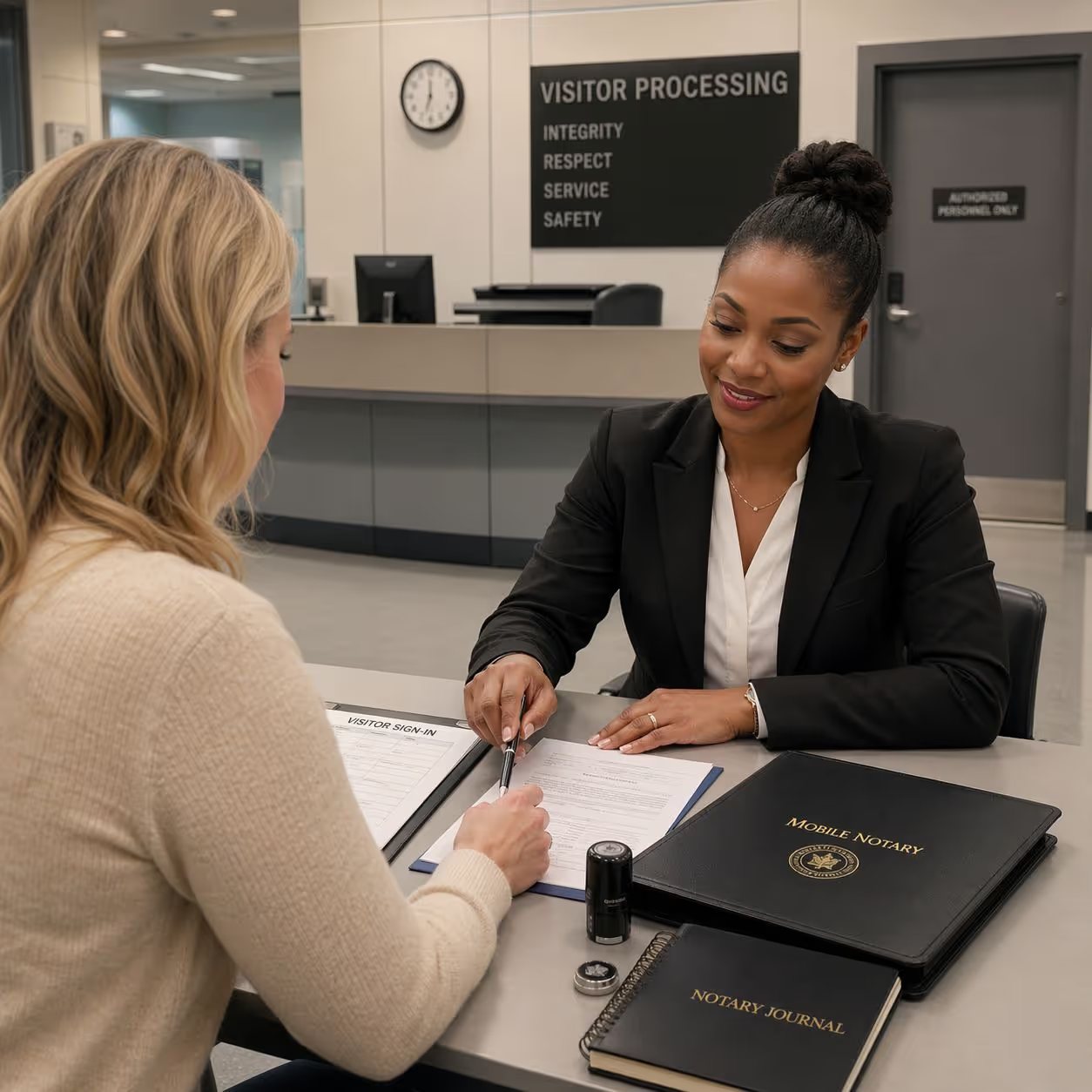
Structured settlement transfer and payout paperwork

Structured Settlement Document Notarization in Las Vegas and Southern Nevada

Structured settlement document notarization supports signing appointments for settlement-related paperwork such as transfer agreements, payout authorizations, legal disclosures, affidavits, consents, and other attorney- or company-prepared documents connected to structured settlement payment rights. This service is designed for recipients, attorneys, insurance or annuity-side representatives, and settlement-transfer participants who need a mobile notary for financial-legal paperwork that may be time-sensitive and document-heavy.

In Nevada, an agreement to transfer structured settlement payment rights requires court approval, so notarization is only one part of a larger process. Structured-settlement transfer materials in court practice commonly involve petitions, disclosures about the payment rights being transferred, and signed consent or affidavit-style documents from the payee or other parties involved.

Lake Mead Mobile Notary travels to homes, offices, attorney offices, financial offices, and other approved meeting places in Las Vegas, Henderson, North Las Vegas, Boulder City, Mesquite, and surrounding Southern Nevada areas. The notary verifies identity, confirms willingness, and completes the requested lawful notarial acts for the documents presented, but does not advise whether a transfer is financially wise, prepare court filings, or determine whether the court, insurer, annuity issuer, or transfer company will approve the transaction.

Documents commonly in the package

This page should preserve the structured-settlement transfer and authorization focus of the source record while adding clearer transaction detail.

  • Transfer agreements

    Structured settlement transactions often center on a transfer agreement involving payment rights and the proposed consideration for that transfer.

  • Payout authorizations

    The legacy record already points to payout authorizations, which may accompany a transfer or other settlement-related processing step.

  • Disclosure documents

    Transfer-related packages commonly include disclosures about the value of future payments, the amount being received, fees, and the consequences of the transaction.

  • Petitions, consents, and court-related forms

    Court practice materials show that structured settlement transfers may involve a petition for approval, written consent, and related hearing or notice documents.

  • Affidavits and sworn statements

    Some packages include affidavit-style documents or sworn statements from the payee or another participant in the transfer process.

  • Entity and company paperwork

    When a structured settlement purchase company or other business participant is involved, related company documents may require execution by an owner, officer, director, or manager.

Who this service is for

The audience for this page is narrower than a general legal-notary service and should stay anchored to real structured-settlement participants.

Structured settlement document notarization is commonly used by settlement recipients or payees, attorneys, insurance representatives, annuity-side administrators, structured settlement purchase companies, and transfer coordinators handling the paperwork around payment-rights transactions. It can also be relevant when a company representative must sign in a business capacity or when a lawyer has prepared supporting affidavits, disclosures, or consent documents for filing.

This page is not just for a single settlement agreement. It should capture the broader document environment around structured settlement payment rights, including transfer disclosures, court-facing paperwork, and instructions coming from counsel, the transferee, insurer, or annuity issuer.

Court approval and filing context

This is the most important authority distinction on the page because Nevada law treats transfer approval separately from the act of notarization.

Nevada law requires court approval of an agreement to transfer structured settlement payment rights. That means the notary appointment may be part of a larger process that includes attorney review, petition filing, disclosures, service or notice steps, and court consideration before a transfer can move forward.

The notarial act supports the execution of the documents presented, but it does not replace court approval, legal review, or financial disclosure obligations. This distinction should be visible on the page because users often confuse “documents are signed” with “the transfer is approved,” and those are not the same milestone.

What to prepare before the appointment

Structured settlement signings tend to go more smoothly when the signer has the full package and knows which documents are personal, financial, or court-related.

  • Completed but unsigned documents

    Have the transfer agreement, disclosure set, affidavits, consent forms, or other settlement paperwork ready for signing, but do not pre-sign notarized pages.

  • Valid ID for every signer

    Each payee, representative, or company signer should have acceptable government-issued identification available at the appointment.

  • Attorney or transfer-company instructions

    Written directions can clarify what needs notarization, who signs where, and whether the package must be returned for filing, review, or court scheduling.

  • Signer-capacity details

    If someone is signing as an officer, manager, director, or other representative rather than only as an individual, that role should be clear in the paperwork.

  • Filing or delivery instructions

    Know whether the signed documents go back to counsel, the transfer company, the insurer, an annuity administrator, or a court-filing workflow after notarization.

  • Any supporting identification or case information

    If the package references a case number, payee information, or prior settlement details, keep those materials available for organization, even though the notary does not verify transaction substance.

Mobile signing workflow

The goal is to preserve the practical simplicity of the source record without flattening the legal-financial complexity of the transaction.

  1. Confirm the document set and signer roles

    Before the appointment, confirm whether the package includes transfer documents, disclosures, affidavits, court-related forms, or representative-capacity signatures.

  2. Meet at the chosen location

    Appointments may take place at a home, office, attorney office, financial office, or another approved meeting location convenient for the signers and coordinators.

  3. Verify identity and complete the notarizations

    The notary verifies identity, confirms willingness, and performs the requested lawful notarial acts for the signatures presented in the package.

  4. Return the executed package as directed

    After the signing, the completed documents can move back through the attorney, transfer company, insurer, annuity administrator, or court-filing workflow specified in the written instructions.

The notary handles identity verification and the requested notarial acts only. Attorneys, courts, insurers, annuity issuers, and transfer companies remain responsible for legal advice, transaction disclosures, filing strategy, and approval of the structured settlement transfer or related transaction.

Structured-settlement questions

What kinds of structured settlement documents may need notarization?

Common examples include transfer agreements, payout authorizations, legal disclosures, petitions, consents, affidavits, and other supporting documents prepared for the transaction.

Does notarization approve the structured settlement transfer?

No. In Nevada, an agreement to transfer structured settlement payment rights requires court approval, and notarization does not replace that approval process.

Who usually signs these documents?

The signer may be the settlement recipient or payee, an authorized company representative, or another participant identified in the transaction paperwork and attorney or company instructions.

Can the notary explain whether selling future payments is a good idea?

No. The notary cannot provide legal or financial advice about the consequences of transferring structured settlement payment rights.

What helps avoid delays at the appointment?

Having the full unsigned package, valid identification, signer-role details, and clear return or filing instructions ready in advance is the best way to reduce delays.

Need professional photos for your property listing?

Real Estate PhotographyProperty Video & Walkthroughs

Need professional documentation services?

Professional Photography ServicesAdmin Support for Realtors

Need branding for your new business?

Realtor Headshots & BrandingReal Estate Websites & SEO

related services

Featured Locations