.avif)
Nevada DMV Identity Affidavit
Lake Mead Mobile Notary provides mobile notarization for the Nevada DMV VP-185 One and the Same Affidavit, the sworn form used when a vehicle owner is known by more than one first name or last name and the DMV requires clarification that both names identify the same person.
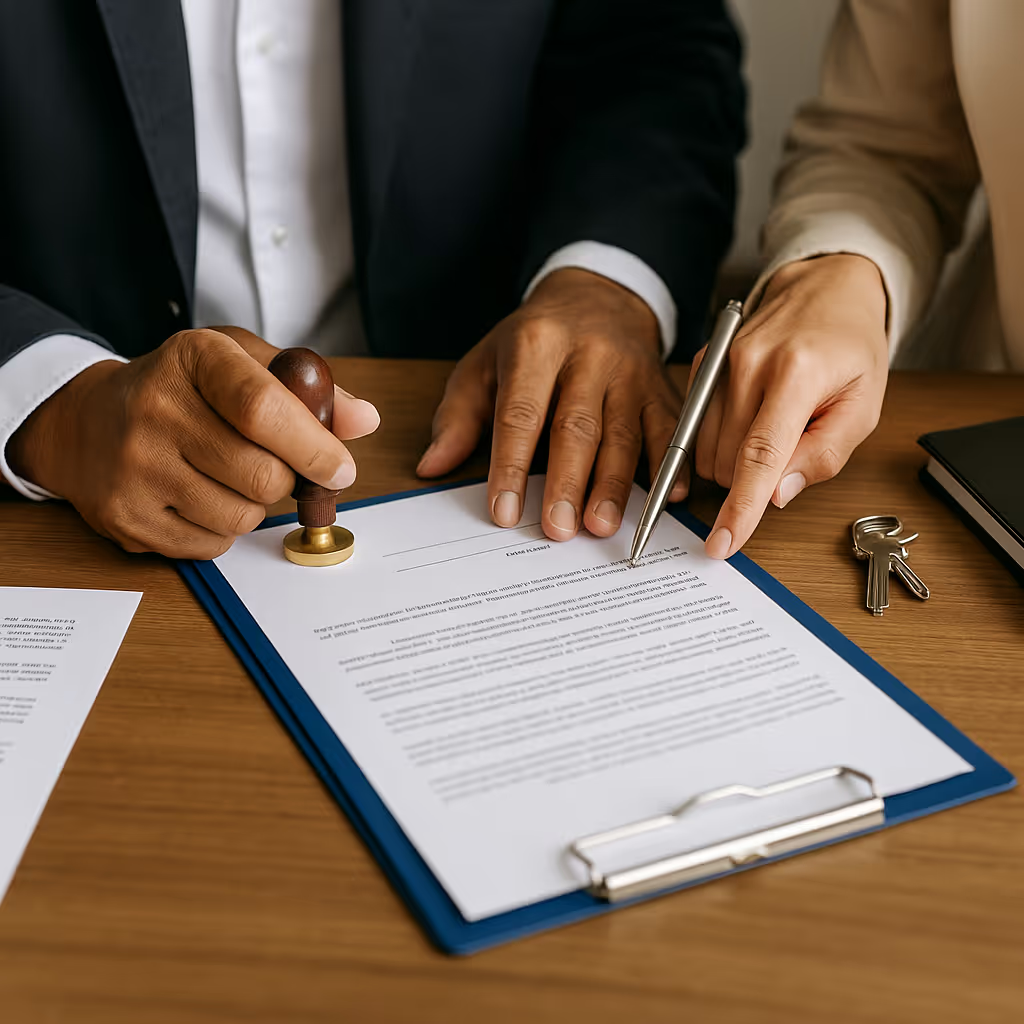
VP-185 must be completed in full and signed in the presence of a notary public or authorized Nevada DMV representative. The form requires an original signature, does not accept photocopied signatures, and cannot be changed after it has been signed and witnessed.
VP-185 is not the same form as VP-012. VP-012 is the Application for Duplicate Nevada Certificate of Title. Both forms may require notarization, but they serve different purposes and should not be substituted for one another.
Correct Form Identification
Several Nevada DMV ownership forms require notarization, but each form addresses a different problem. Confirm the exact form number before scheduling or signing.
VP-185 is used when an individual is known by more than one first name or last name. The affiant swears that the listed names identify the same person. The form must be completed in full and signed before a notary or authorized Nevada DMV representative.
VP-012 is used when a Nevada certificate of title has been lost, stolen, mutilated, or otherwise needs to be replaced. It contains a separate acknowledgment and is completed by the legal owner shown in DMV records.
VP-019 addresses an alteration, erasure, error, or change on a vehicle ownership document. It explains what happened to the document; it is not the standard form for merely establishing that two names identify the same person.
A Statement of Facts may be requested when DMV needs a sworn explanation about a vehicle or ownership transaction. It should not be substituted for VP-185 when the DMV specifically requests the One and the Same Affidavit.
Marriage certificates, divorce decrees, adoption records, and court orders may be required when a customer is formally changing a name on a driver license, registration, title, or insurance record. VP-185 does not replace every legal name-change document.
The DMV may also require the title, registration, lienholder instructions, a vehicle record, or other transaction documents. Notarizing VP-185 does not complete the separate title or registration transaction.
Identity Clarification
The Nevada DMV decides whether VP-185 is appropriate for a particular record or transaction. These are common types of situations in which a name difference may need clarification.
A title or registration may display a prior surname while the owner now uses a married, restored, or court-ordered surname. The DMV may require VP-185, legal name-change evidence, or both.
A vehicle record may use a full first name while another ownership document uses a shortened, alternate, or previously recorded first-name version. VP-185 is designed to address more than one first-name identity when the DMV accepts that process.
A surname may appear with a spelling, spacing, hyphenation, or formatting difference across a title, registration, identity record, or supporting document. The receiving DMV unit determines whether VP-185 is sufficient.
A customer moving a vehicle into Nevada may encounter a name variant between an out-of-state title and current Nevada identification. The complete transaction may still require the original title, VIN inspection, insurance, and other records.
A name difference can appear in an inherited vehicle, trust, lienholder, or power-of-attorney package. VP-185 does not prove inheritance, trustee powers, agency authority, or lien release; separate documents may be required.
VP-185 contains a field that can reference a federal employer identification number, while the DMV title guide describes the form primarily for an individual known by more than one name. Confirm business-name discrepancies with DMV before using it.
Form Completion
VP-185 is a one-page sworn affidavit. Complete the information carefully, but do not sign it until the notary or authorized DMV representative is present.
Enter the affiant's full legal name as requested on the form. Use the current form and follow any DMV instruction about how the legal name should match the identity or ownership records.
VP-185 requests both the physical residence address and the mailing address. Complete both sections even when the addresses are the same unless DMV directs otherwise.
In the statement identifying the person as “the same person as,” enter the alternate name exactly as it appears in the title, registration, or other record being reconciled.
The form requests a Nevada driver-license or identification number, date of birth, or a federal employer identification number for a business, as applicable to the DMV's instructions.
The notarial section records the Nevada county where the oath and signing occur. The county is based on the physical location of the notarization, not necessarily the owner's home address.
The affiant signs only after the notary or authorized DMV representative administers the oath or affirmation. The notarization is a jurat, not a standard acknowledgment.
Appointment Preparation
Use the current Nevada DMV One and the Same Affidavit rather than a duplicate-title application, generic affidavit, or outdated copy. Have the form completed except for the signature and notarial section.
The person making the sworn statement must appear personally and establish identity through a method acceptable under Nevada notarial law. The identity used for notarization is separate from the DMV's decision about the transaction.
Have the title, registration, application, lien record, or other transaction document showing the alternate name available so the form can be completed accurately before signing.
A marriage certificate, divorce decree, adoption record, or court order may be required by DMV for a formal name change. These records are not automatically required for the notarial act but may be required for the transaction.
Bring any written instruction identifying the form, alternate name, transaction, and supporting documents. Resolve uncertainty about form selection before the notary arrives.
If the appointment also includes a duplicate-title application, lien release, power of attorney, erasure affidavit, or other DMV document, bring the complete original packet and identify every signature requiring notarization.
Mobile Appointment
Verify that the DMV, dealer, lienholder, title processor, or other receiving party requested the One and the Same Affidavit and not VP-012, VP-019, VP-022, or another ownership form.
Enter the legal name, addresses, alternate name, and requested identity-reference information. Review every field because the form cannot be changed after signing and witnessing.
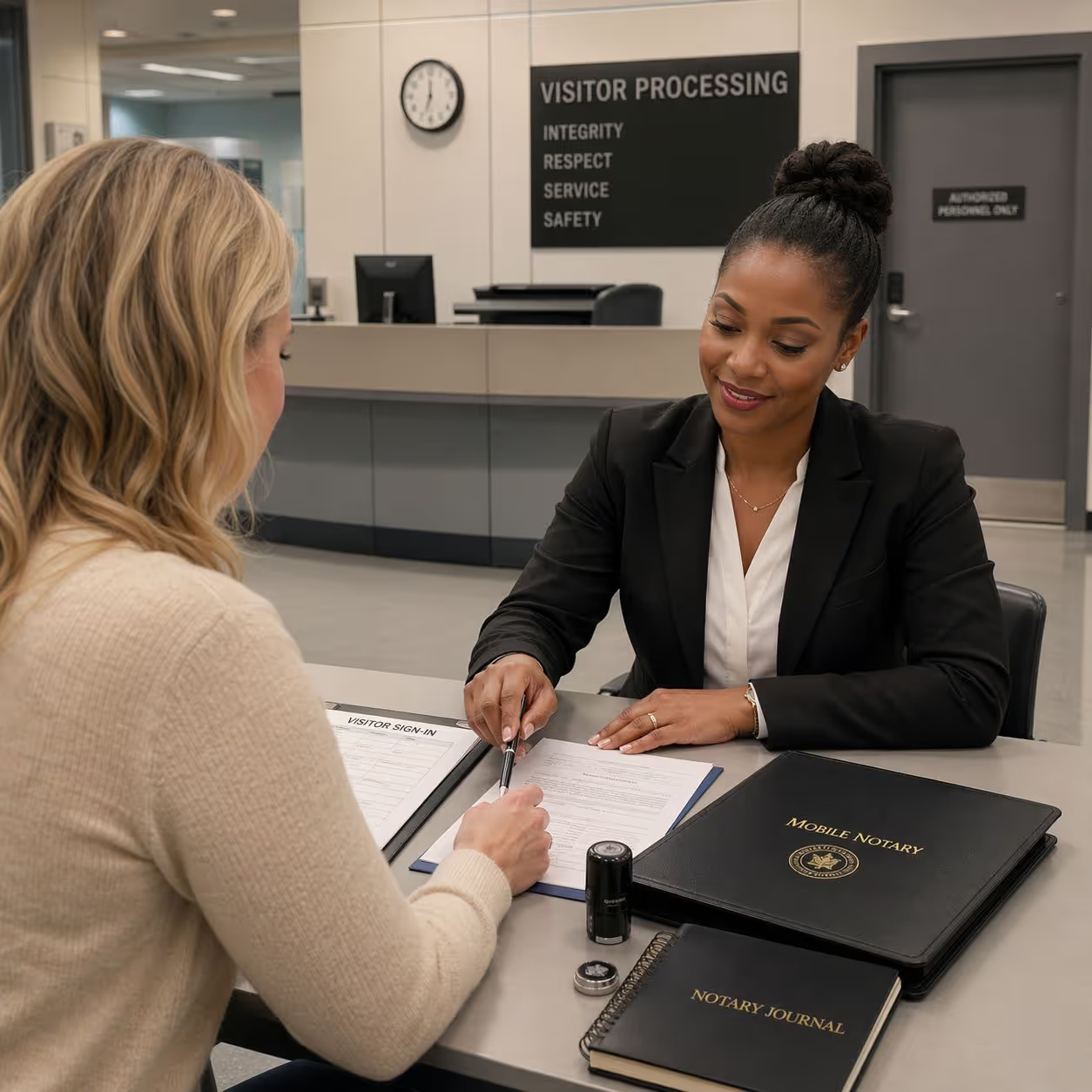
The affiant appears personally, establishes identity, swears or affirms that the statements are true, and signs the original VP-185 in the notary's presence.
The notary completes the date, venue, signature, and seal. The customer then submits the original affidavit with the title, registration, or other documents required by the receiving DMV unit.
Agency Coordination
Nevada permits VP-185 to be signed before a notary public or an authorized Nevada DMV representative. Mobile notarization allows the original sworn form to be completed before the customer enters a DMV office or submits the broader transaction under DMV instructions.
A completed VP-185 is only one part of the transaction. A title, registration, lien, estate, trust, business, out-of-state, or ownership matter may require additional original documents, inspections, payments, or agency review.
An authorized DMV representative may witness the signature as an alternative to a notary. Confirm whether the form can be completed during the scheduled transaction and whether an appointment is required.
Do not assume an AAA or other limited-service location can witness VP-185 or process the associated title transaction. Confirm the exact services offered at that location before relying on a Facility Reference.
A dealer, lienholder, registration service, or title processor may identify the name discrepancy and provide transaction-specific instructions. Those parties do not replace the required notarial act unless they are separately authorized to witness the form.
Online title tools may allow a customer to begin or pre-stage parts of a transaction. When VP-185 is required, the current form still calls for an original sworn signature and a notary or authorized DMV representative.
Common Questions
The correct current form number is VP-185. Nevada DMV lists VP-185 under Vehicle Ownership forms and describes it as the affidavit used to clarify the identity of a vehicle owner.
No. VP-012 is the Application for Duplicate Nevada Certificate of Title. It is used when a Nevada title has been lost, stolen, mutilated, or otherwise requires replacement. VP-185 is the One and the Same Affidavit.
Yes. VP-185 contains a jurat. The affiant must swear or affirm that the statements are true and sign the form in the presence of the notary public or authorized DMV representative.
The form states that signatures must be original and that photocopies are not acceptable. Submit the original signed and notarized form unless the DMV gives transaction-specific written instructions permitting another method.
No changes should be made after the form is signed and witnessed. If information is wrong or incomplete, use a new original VP-185 and complete a new notarization.
No. The affiant swears that the statement is true. The notary verifies the signer for the notarial act, administers the oath, witnesses the signature, and completes the jurat. DMV decides whether the affidavit and supporting records satisfy the transaction.
It depends on the transaction. DMV may require legal name-change evidence when a customer is changing a driver license, registration, title, or insurance record. VP-185 does not automatically replace those records.
The form includes a field for a federal employer identification number, but the DMV title guide describes VP-185 as an affidavit for an individual known by more than one name. Confirm the correct business form and supporting entity records with DMV before signing.
Yes, the form and DMV title guide permit signing before an authorized Nevada DMV representative. Confirm that the office and transaction can accommodate that option before the visit.
No. Notarization completes the sworn affidavit only. The DMV controls whether and how a title, registration, driver license, or other record is updated and what additional documents are required.
No. Acceptance can depend on the correct form, complete transaction documents, original signatures, legal name-change evidence, title status, lien information, identity records, fees, and the DMV's review.










.avif)


