.avif)
Jail and detention document notarization
Jail visit notarization is a mobile notary service for documents that must be signed by someone who is in custody at a jail or detention facility. It is often used for powers of attorney, affidavits, authorization letters, vehicle-release paperwork, and other prepared documents that need a lawful notarial act while the signer is incarcerated.
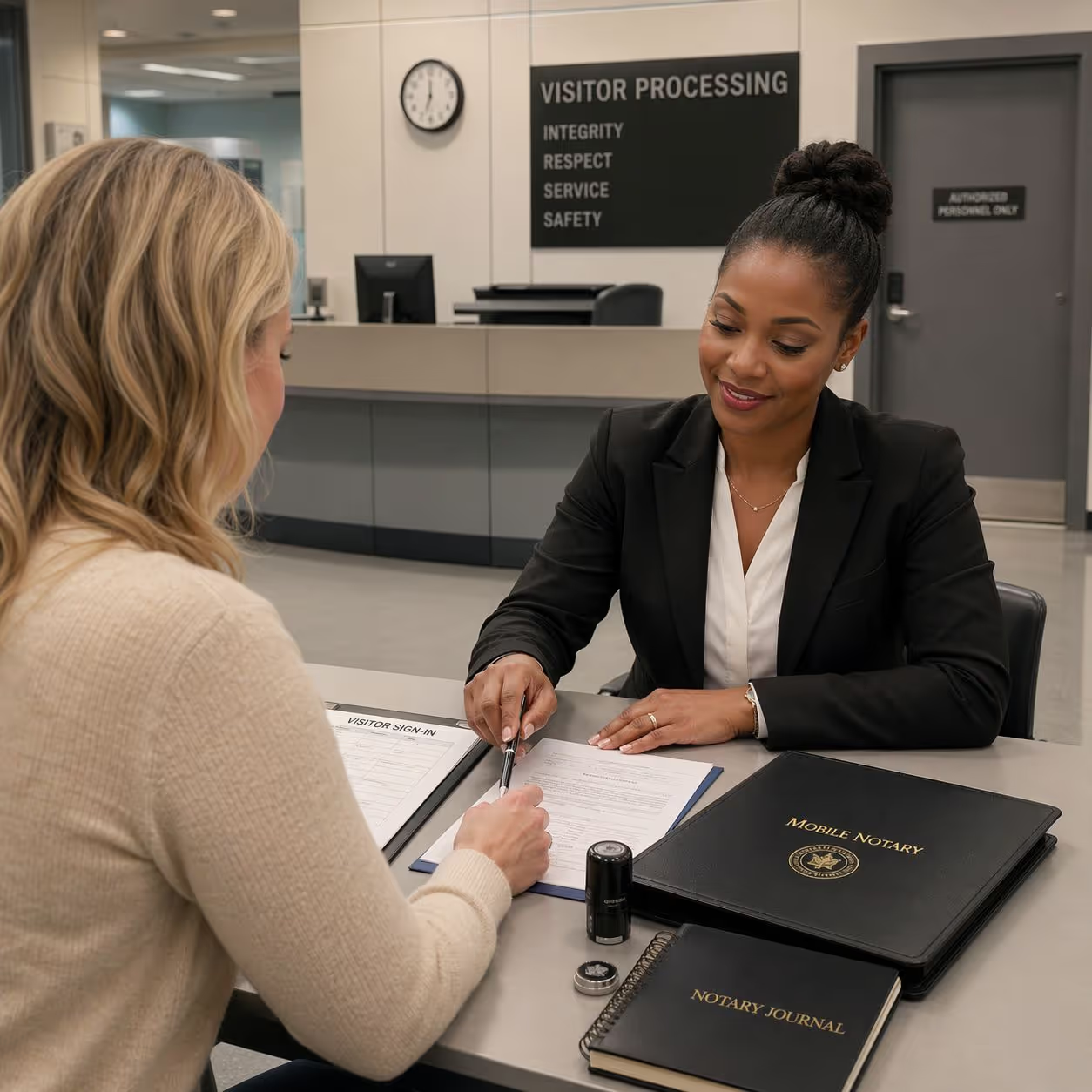
Lake Mead Mobile Notary coordinates jail and detention-center notarization appointments for families, attorneys, and other outside helpers who need an in-custody signer to complete documents correctly. The notary’s role is to verify identity, confirm willingness, and perform the requested lawful notarial act when the signer personally appears and the facility process allows the appointment to move forward.
Because jail visits involve access restrictions and identification issues that do not come up in ordinary home or office appointments, this service works best when documents, facility instructions, and signer details are confirmed in advance.
A notary cannot override jail or detention-center procedures, cannot force facility access, and cannot complete a notarization unless the signer personally appears and can be identified under Nevada notary rules.
Lake Mead Mobile Notary does not provide legal advice, does not select the document, and cannot guarantee that a jail-signed document will be accepted by a court, agency, buyer, lender, or other receiving party. Questions about which form to use, whether witnesses are required, or whether the completed document will be accepted should be directed to the attorney, agency, or institution requesting the paperwork.
Jail and detention document notarization
Jail visit notarization is a mobile notary service for documents that must be signed by someone who is in custody at a jail or detention facility. It is often used for powers of attorney, affidavits, authorization letters, vehicle-release paperwork, and other prepared documents that need a lawful notarial act while the signer is incarcerated.
Lake Mead Mobile Notary coordinates jail and detention-center notarization appointments for families, attorneys, and other outside helpers who need an in-custody signer to complete documents correctly. The notary’s role is to verify identity, confirm willingness, and perform the requested lawful notarial act when the signer personally appears and the facility process allows the appointment to move forward.
Because jail visits involve access restrictions and identification issues that do not come up in ordinary home or office appointments, this service works best when documents, facility instructions, and signer details are confirmed in advance.
A notary cannot override jail or detention-center procedures, cannot force facility access, and cannot complete a notarization unless the signer personally appears and can be identified under Nevada notary rules.
Lake Mead Mobile Notary does not provide legal advice, does not select the document, and cannot guarantee that a jail-signed document will be accepted by a court, agency, buyer, lender, or other receiving party. Questions about which form to use, whether witnesses are required, or whether the completed document will be accepted should be directed to the attorney, agency, or institution requesting the paperwork.
Jail visit notarization is usually driven by practical documents that must be signed while the person is incarcerated and unable to attend a regular appointment outside the facility.
Families and attorneys often arrange notarization when an incarcerated signer needs to authorize someone to handle legal, financial, property, or personal matters outside the facility.
Some custody-related matters require a signed statement, declaration, or affidavit that must be properly notarized before it can be delivered to an attorney, court, or third party.
A signer in custody may need to authorize another person to act on their behalf for limited personal, logistical, or document-related tasks.
When a vehicle must be retrieved, sold, transferred, or released while the owner is incarcerated, notarized authorization documents may be part of the process.
In-custody signers sometimes need to complete prepared documents tied to housing, storage, personal property, or outside account coordination.
If the document is complete, lawful, and ready for execution, jail visit notarization may be arranged for other records that require a Nevada notarial act.
This service is built for custody-related document situations where the signer cannot leave the facility to visit a traditional notary appointment.
Jail visit notarization is commonly used by family members, attorneys, and outside coordinators who need a document signed by someone who is currently incarcerated. The person arranging the visit may handle document delivery, scheduling communication, and post-signing return logistics, but the incarcerated individual remains the actual signer for the document being notarized.
This page stays distinct from ordinary power of attorney or affidavit service pages because the main challenge is not just the document itself. The challenge is arranging a lawful notarial act inside a controlled detention setting where access, identification, timing, and facility procedures all affect whether the appointment can proceed.
Custody-related notarization usually involves more coordination than a home, office, or hospital appointment because access is controlled by the facility.
Before scheduling, confirm exactly who needs to sign, what document is being presented, and whether the document is complete and ready for notarization. The notary does not choose the form or decide its legal effect.
Jails and detention centers control outside access, visitation procedures, and document handling. Families or attorneys should confirm current facility rules, where the meeting can occur, and whether any pre-clearance or routing steps are required.
Nevada law still requires satisfactory evidence of identity for the signer. If the usual government-issued identification method may be difficult in custody, resolve that issue in advance instead of assuming the facility will solve it at the appointment.
If access is granted and the signer personally appears before the notary, the notary verifies identity, confirms willingness, administers any required oath or affirmation when applicable, and completes the requested lawful notarial act.
After notarization, the completed paperwork is returned to the attorney, family member, or requesting party according to the facility process and the instructions that came with the document.
Good preparation helps avoid failed jail visits, document delays, and confusion about what the notary can and cannot do.
Have the documents filled out before the appointment whenever possible so the jail visit is focused on the notarial act rather than drafting or selecting forms.
Be ready with the signer’s full name, facility information, and any internal details needed to help the facility identify the person for the visit process.
If a lawyer, court, buyer, agency, or other institution requested the document, keep those written instructions with the paperwork so execution can follow the correct process.
Do not assume custody status removes Nevada identification requirements. If identification may be difficult, address that question before the visit is attempted.
Confirm current visit rules, hours, restrictions, document-routing procedures, and any facility-specific instructions before locking in expectations for the appointment.
Know where the completed documents need to go after the notarization, whether to an attorney, family member, agency, buyer, or another receiving party.
The two biggest issues in jail notarization are usually access and identification, not the physical act of applying the notarial certificate.
Nevada notary law requires the signer to personally appear and be identified through a legally acceptable method. Depending on the document type, the notary may also need to administer an oath or affirmation, and some documents require signing in the notary’s presence.
Jails and detention centers control who may enter, where the meeting occurs, how long the process can take, and how documents move in or out of the facility. A mobile notary cannot waive those rules, guarantee a visit will be permitted, or proceed without satisfactory evidence of identity.
Lake Mead Mobile Notary also cannot advise whether a power of attorney, affidavit, authorization letter, or release form is the correct document for the situation. That decision belongs to the attorney, institution, or person requesting the paperwork.
Yes, a family member or attorney can usually coordinate the appointment details, but the incarcerated person must still personally appear as the signer for the notarization itself.
No. The notary can complete a lawful notarial act for a prepared document, but does not choose the form, draft legal content, or advise which document best fits the situation.
Facility rules control access and can affect whether the appointment can happen as planned. Jail staff or the requesting attorney should be consulted for the current process before relying on a visit.
That issue should be addressed before the appointment. Nevada law still requires satisfactory evidence of identity, and the notary cannot ignore that requirement just because the signer is in custody.
No. Notarization helps authenticate the signing process, but the receiving court, agency, buyer, institution, or other third party decides whether the completed document meets its own requirements.















.avif)


